


Holiday Lights Tripping Your Breaker? How to Add a Safe Outdoor Circuit
Christmas lights trip a breaker for one of three reasons: too many watts on the circuit, moisture at an outdoor connection or a shared circuit that also feeds a freezer or another appliance. The lasting fix is a dedicated, GFCI-protected outdoor circuit, which our team adds through circuit installation and upgrades across Dallas-Fort Worth. We work under license TECL-31627, stay fully bonded and insured, answer emergency calls 24/7 and carry a 4.9-star Google rating, plus feedback on our Yelp and Facebook. Call 817-428-4404 to plan your holiday lighting before the first string goes up.
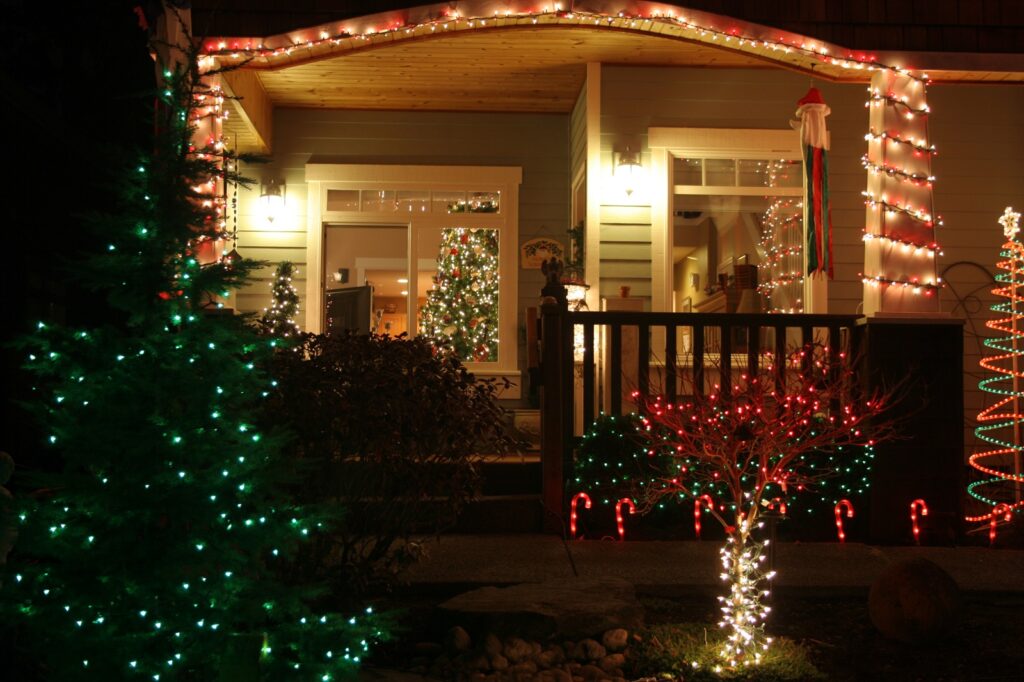
This guide helps you find which cause you have, shows what you can safely fix yourself and explains how an electrician adds a new outdoor circuit.
What Happens When Christmas Lights Trip a Breaker
A breaker trips when a circuit carries more current than its rating allows, or when a short circuit sends current past that limit. A GFCI (ground-fault circuit interrupter) works differently. It compares the current leaving on the hot wire with the current returning on the neutral wire, and it shuts the circuit off when a small amount escapes, such as through a wet connection. The two devices guard against different problems, so the first step is to find out which one tripped.
Watts equal volts times amps, so a 15-amp circuit at 120 volts carries 1,800 watts at its limit and a 20-amp circuit carries 2,400 watts. Holiday lights often run three hours or more each night, and the National Electrical Code continuous-load rule sizes a circuit at 125 percent of such a load. That rule works out to a planning limit of 80 percent of the circuit rating for long-running lights, which means 1,440 watts on a 15-amp circuit and 1,920 watts on a 20-amp circuit.
LED strings change the math. Avista’s holiday lighting comparison lists a 100-light incandescent mini string at about 40 watts against about 4.8 watts for the same count of LEDs. That gap lets an LED display carry roughly eight times as many lights on the same circuit.
| Circuit | 80 percent limit for long-running lights | 100-light incandescent strings (40 W each) | 100-light LED strings (4.8 W each) |
|---|---|---|---|
| 15-amp, 120-volt circuit | 1,440 watts | 36 strings | 300 strings |
| 20-amp, 120-volt circuit | 1,920 watts | 48 strings | 400 strings |
The table assumes the lights are the only load on the circuit. The end-to-end limit printed on each string’s tag usually stops you before the circuit does, so follow the tag as well as the table.
Why Christmas Lights Trip Breakers in DFW Homes
Six causes account for most holiday trips, and many homes have more than one of them at work at the same time.
Too Many Watts on One Circuit
Older incandescent strings, inflatables, animated displays and projectors add up faster than most people expect. Thirty incandescent mini strings draw 1,200 watts together, which uses most of a 15-amp circuit’s 1,440-watt planning limit before anything else turns on. Add up the watts printed on each item’s label before you plug in the next one.
A Shared Circuit With a Garage Freezer or Appliance
In many homes, the garage and the exterior outlets share one circuit, and that circuit often also runs a chest freezer, a garage refrigerator or a workbench. A compressor motor pulls a brief surge of current when it starts, and that surge on top of the lights’ steady load can trip the breaker. Our post on garage workshop circuits explains why motor loads and general outlets belong on separate circuits. A trip on a shared circuit also shuts off the freezer, which makes this the first cause to fix.
Moisture and Ground Faults at Outdoor Connections
Water finds the plug-to-plug connections between strings, the sockets of loose bulbs and the outlet itself. Rain, sprinkler overspray and heavy dew let a small amount of current leak to ground, and the GFCI shuts the circuit off to stop it. Our guide on why outdoor lights flicker or fail after rain explains how weather exposes weak connections. The Electrical Safety Foundation International (ESFI) advises keeping connections away from water, snow and ice.
Strings Connected End to End Past the Manufacturer Limit
Each string’s tag lists how many strands can connect end to end, and that limit protects the string’s thin wires and its plug fuse. A chain longer than the limit can blow the plug fuse or overheat the first cord in the line, even when the circuit breaker stays on. ESFI advises connecting only the number of strands the manufacturer recommends, and extension cords need the same attention. Match every cord to the load and to outdoor use.
Worn Cords, Old Timers and Tired Outlets
Frayed cords, cracked sockets and damaged plugs leak current or run hot, so ESFI advises inspecting every string before you hang it. Plug-in timers and power strips carry their own ratings, and an old one may sit below the load you ask of it. A GFCI outlet that trips with nothing plugged in, will not reset or fails its test button needs replacement through our outlet replacement service. Our guide to GFCI outlets that keep tripping covers the indoor version of the same problem.
An Outdoor Outlet Without an In-Use Cover
NEC 406.9 calls for a weatherproof in-use cover on receptacles in wet outdoor locations, and that cover keeps the outlet protected even with a cord plugged in. A flat flip lid only seals when closed, so a holiday cord leaves the outlet open to rain. Older homes may have only a flat cover, or none at all, on the porch and patio outlets.
Warning Signs to Watch For
These signs point to a circuit or connection that needs attention before more lights go up.
- The breaker trips within seconds of switching the lights on, or only after they have run for an hour or more.
- The GFCI outlet trips when it rains, when sprinklers run or on damp, foggy nights.
- Lights dim or flicker when the garage freezer, the refrigerator or the air conditioner starts.
- A plug, extension cord or outlet cover feels warm to the touch.
- The same breaker has tripped more than once this season, even with fewer lights.
- A plug or outlet shows brown marks or gives off a faint hot-plastic smell. Unplug the lights and call an electrician.
- The only outdoor outlet shares a circuit with indoor rooms, so a trip also darkens a bedroom or the garage.
DIY vs. Professional: What You Can Handle Yourself
What You Can Safely Do Yourself
Most fixes at the string and cord level sit within a homeowner’s reach.
- Add up the watts on every string, inflatable and projector, then compare the total with the table above.
- Swap incandescent strings for LED strings, which drops a 100-light string from about 40 watts to about 4.8 watts.
- Plug strings into outlets on different circuits instead of running one long chain from a single outlet.
- Keep connections off the ground, cover them with outdoor-rated connection covers and use outdoor-rated extension cords.
- Press the test button on each GFCI outlet, then press reset once after a trip.
- Turn the lights off before you leave home or go to bed, as ESFI advises.
Stop at the second trip. A breaker that trips again at once after a reset points to a deeper problem, and our guide to a breaker that trips immediately every time explains what that means.
What Needs a Licensed Electrician
Call a licensed electrician when a breaker trips with nothing plugged in, when an outlet or breaker feels warm, when a GFCI will not reset or when you want a new outdoor outlet or circuit. A new circuit means working inside the panel, and many cities require a permit and an inspection for that work. The electrician also checks that the wire size, breaker size and GFCI protection match the load you plan to run.
What Texas and Local Rules Say
Texas lets homeowners do electrical work on a dwelling they own and live in, and the Texas Department of Licensing and Regulation notes that municipal or regional rules may override that exemption. The City of Fort Worth permit guide states that changing, moving or repairing electrical, including new electric lines, requires an electrical permit. The City of Dallas electrical guide lists a small-addition exemption for one new circuit that does not change the electrical service, and it directs most other permits to contractors registered with the city. Rules differ by city and by scope, so a licensed electrician confirms the permit requirement for your address before work begins.
Six Fixes for Holiday Lights That Trip a Breaker
Work down this list in order, because each fix takes more effort than the one before it.
Fix 1: Count the Watts and Switch to LED
Add up the label watts for everything on the circuit, including inflatables, projectors and controllers. LED strings draw about 4.8 watts per 100 lights against about 40 watts for incandescent mini lights, so a full swap often ends the trips by itself.
Best for: displays that trip within seconds of switch-on. Limit: the swap does nothing for a wet connection or a shared circuit.
Fix 2: Spread the Load Across Circuits
Plug groups of strings into outlets that sit on different breakers, and keep the garage freezer’s circuit out of the plan. Switch off one breaker at a time to learn which outlets share a circuit, or ask an electrician to trace them. Then split the display so no circuit passes its planning limit.
Best for: displays that trip only when several outlets run at once. Limit: long extension cords between outlets bring their own limits, so keep each cord short, outdoor rated and clear of walkways.
Fix 3: Seal Connections and Cover the Outlet
Wrap plug-to-plug connections in weatherproof connection covers, raise them off the ground and fit the outdoor outlet with an in-use cover. These steps stop the moisture trips that show up after rain, fog and sprinkler cycles.
Best for: trips that follow damp weather. Limit: a sealed connection still fails when a string has a cracked socket, so inspect every string first.
Fix 4: Replace Worn Cords, Timers and GFCI Outlets
Retire any string with frayed insulation or cracked sockets, replace timers and power strips that sit below the load and have an electrician swap a GFCI outlet that trips with no load or will not reset. The electrician also confirms the wiring behind the outlet is sound.
Best for: trips that start with no change in the display. Limit: a new outlet does not add capacity to an overloaded or shared circuit.
Fix 5: Add a Dedicated Outdoor Holiday Circuit
A dedicated circuit gives the lights their own breaker, so the freezer, the garage and the indoor rooms no longer share their load. An electrician runs a new cable from the panel to a weatherproof GFCI-protected outlet where the display needs power, and a 20-amp circuit raises the planning limit from 1,440 to 1,920 watts. Add permanent outdoor lighting hardware to the same circuit and you can plug in a timer and leave the extension cords in storage.
Best for: large displays, homes where the only outdoor outlet shares a circuit with the garage and families who put lights up every year. Limit: it needs available panel capacity, and the city may require a permit and an inspection.
Fix 6: Add Panel Capacity Before the New Circuit
A new circuit needs an open breaker space and enough capacity in the service. When the panel has no open slots or the home already runs near its limit, the electrician can upgrade the panel first through our panel and breaker replacement service, then add the holiday circuit. Our guide on summer heat and heavy appliance loads shows how to tell whether a service has room to spare.
Best for: panels that are full or crowded, and homes adding an EV charger or hot tub at the same time. Limit: it adds scope to the project, so a load check comes first.
| Symptom | Most likely cause | Fix to try |
|---|---|---|
| Trips seconds after switch-on | Too many watts on one circuit | Fix 1 or Fix 2 |
| Trips only on damp nights | Moisture at a connection or the outlet | Fix 3 |
| Trips when the freezer starts | Shared circuit with a motor load | Fix 2 or Fix 5 |
| GFCI will not reset, or trips with nothing plugged in | Worn GFCI outlet or a damaged string | Fix 4 |
| Same breaker trips every season | Circuit too small for the display | Fix 5 |
| No open breaker space for a new circuit | Full or crowded panel | Fix 6 |
How an Electrician Adds an Outdoor Circuit
The steps follow the same order in most DFW homes, and the permit step depends on your city.
- Load check: the electrician adds up the loads on the panel, confirms an open breaker space and chooses a 15-amp or 20-amp circuit for the display.
- Route and outlet location: the electrician picks the outlet spot, a cable route that avoids sprinkler lines and landscape lighting, and a weatherproof box.
- Permit check: the electrician confirms whether your city requires a permit for the circuit and files it when it does.
- Installation: the electrician runs the cable, mounts a GFCI-protected outlet with an in-use cover and connects a new breaker in the panel.
- Verification: the electrician tests the GFCI, checks the breaker and confirms the circuit carries the planned load without a trip.
- Inspection and labeling: the city inspector reviews the work when the permit calls for it, and the electrician labels the new breaker in the panel directory.
Code rules for outdoor outlets change with each National Electrical Code edition, so a licensed electrician applies the edition and local amendments your city enforces. That includes the GFCI protection, the in-use cover and the wire and breaker sizes for the new circuit.
Holiday Lighting Season in Dallas-Fort Worth
The National Weather Service in Fort Worth lists November 22 as the average first freeze for Dallas-Fort Worth, so most displays run through that first freeze and the damp, cold weeks that follow. Fog, winter rain and sprinkler overspray keep outdoor connections wet, which tests every cover, cord and GFCI on the circuit.
| When | What to do |
|---|---|
| Early November | Inspect every string, add up the watts and test each GFCI outlet before the display goes up |
| Before Thanksgiving | Finish any new outlet, circuit or panel work so the display has power from the first night |
| Around the first freeze (average date: November 22) | Run the full display on a damp night and watch for trips |
| After New Year’s Day | Store extension cords with the decorations and note any trips for an electrician |
Our electricians serve Dallas, Fort Worth, Haltom City and the surrounding communities, including homeowners who need circuit installation in Southlake, circuit installation in Grapevine and circuit installation in Colleyville. Each city page lists the local permit contacts and the services we provide there.
Frequently Asked Questions
Why do my Christmas lights keep tripping the breaker?
Three causes cover most trips: too many watts for the circuit, moisture at an outdoor connection and a shared circuit that also feeds a freezer or another appliance. Add up the watts first, then check for wet connections, then find out which outlets share the breaker. A breaker that trips again the moment you reset it needs an electrician.
Why do Christmas lights trip the GFCI when it rains?
A GFCI shuts the circuit off when a small amount of current leaks to ground, and rain gives that current a path through plug connections, bulb sockets and the outlet. Raise the connections off the ground, wrap them in weatherproof covers and fit the outlet with an in-use cover. A GFCI that still trips on damp nights points to a worn GFCI outlet or a damaged string.
How many Christmas lights can go on one circuit?
Watts decide the answer, not the number of strings. A 15-amp circuit has a planning limit of 1,440 watts for long-running lights, and a 20-amp circuit has 1,920 watts. That equals about 36 and 48 incandescent strings of 100 lights, or about 300 and 400 LED strings, when the lights are the only load on the circuit.
Do LED Christmas lights stop breakers from tripping?
LEDs help a great deal with overloads because a 100-light LED string draws about 4.8 watts against about 40 watts for an incandescent mini string. They do not fix a wet connection or a shared circuit. Pair the switch to LED with sealed connections and a plan for which outlet feeds which strings.
Do outdoor outlets need GFCI protection in Texas?
Standard 125-volt outdoor receptacles at homes need GFCI protection under NEC 210.8(A)(3). Your city enforces the code edition and amendments it has adopted, and some outdoor outlets fall under special exceptions. A licensed electrician confirms which rule applies to your outlet.
How do I find out which breaker feeds my outdoor outlets?
Plug a lamp into the outlet, then switch breakers off one at a time while a helper watches the lamp. Note every other outlet or light that goes dark with it, and label the breaker in the panel directory. A breaker that also feeds the garage, a freezer or indoor rooms is a good candidate for a dedicated outdoor circuit.
Why do my lights trip the breaker when the freezer or refrigerator starts?
A compressor motor pulls a brief surge of current when it starts, and that surge stacks on top of the lights’ steady load on a shared circuit. The breaker can trip even when the lights alone sit under the limit. Put the lights on another circuit or add a dedicated outdoor circuit to separate the two loads.
Can I run Christmas lights through a window or door with an extension cord?
ESFI advises keeping cords out of walkways and not running them through doorways or under rugs. A window or door that closes on a cord can also damage its insulation. An outdoor outlet with an in-use cover is the better answer, and an electrician can add one near the display.
What size circuit do I need for a large holiday display?
A 20-amp, GFCI-protected circuit gives more room than a 15-amp circuit because its planning limit is 1,920 watts against 1,440 watts. An electrician picks the size from your total watts, the cable run and the panel’s capacity. LED displays often fit a 15-amp circuit with room to spare.
Can I install an outdoor outlet or circuit myself in Texas?
Texas law lets homeowners do electrical work on a dwelling they own and live in, but municipal or regional rules may override that exemption. Dallas asks homeowners who do their own work to show ownership and occupancy and to meet its examination requirement. Most homeowners hire a licensed electrician so the work meets code and passes inspection.
Does a new outdoor circuit need a permit in Dallas or Fort Worth?
It depends on the city and the scope. Fort Worth’s guide states that new electric lines require an electrical permit, while Dallas’s guide lists one new circuit that leaves the service unchanged among its permit exemptions. Your electrician confirms the rule for your address and files the permit when the city requires one.
Do I need weatherproof covers on my outdoor outlets?
Yes. NEC 406.9 calls for a weatherproof in-use cover on receptacles in wet outdoor locations, so the outlet stays protected with a cord plugged in. A flat flip lid only seals when closed. A bubble-style in-use cover keeps rain off the plug and the receptacle while the lights run.
Is it safe to leave Christmas lights on all night?
ESFI advises turning holiday lights off before you leave home or go to bed. A timer or smart plug handles that automatically. Check that its rating covers the total watts on the circuit.
What if my electrical panel has no open slots for a new circuit?
The electrician can upgrade the panel, add a subpanel or rework the existing circuits, depending on what a load check shows. That check comes first so the new circuit does not push the service past its limit. Our panel and breaker replacement team handles the upgrade path when the panel itself is the limit.
How do I schedule a holiday lighting circuit check with Tarrant Electric?
Call 817-428-4404 or schedule online, and tell us how many outlets feed the display and which breaker trips. Our licensed electricians cover Dallas, Fort Worth, Haltom City and nearby communities, with 24/7 emergency response. We trace the circuit, test the GFCI protection and explain your options before work begins.
When to Call Tarrant Electric
Call Tarrant Electric when a breaker trips with nothing plugged in, when a GFCI will not reset, when an outlet or cord feels warm or when your display needs more power than the existing outlets can give. Our electricians trace which outlets share a circuit, test the GFCI protection and tell you plainly whether a simple fix or a new circuit solves the problem.
We serve Dallas, Fort Worth, Haltom City and the surrounding communities under license TECL-31627, and we answer emergency calls 24/7. A tripped breaker that also shut off a freezer or a sump pump deserves a call right away at 817-428-4404.
Why DFW Homeowners Choose Tarrant Electric
| What We Offer | What It Means for You |
|---|---|
| Licensed Electrical Contractor (TECL-31627) | Our licensed team follows Texas state licensing standards on every project |
| Fully Bonded and Insured | Our bond and insurance cover your property and our crew on every job |
| 24/7 Emergency Electrical Service | Help is available any time, day or night |
| 4.9-Star Google Rating, 95+ Reviews | A consistent track record from customers across the DFW area |
| 100 Percent Satisfaction Guarantee | We stand behind every job until you feel fully satisfied with the result |
| Clear Scope and Options Before Work Begins | You review the plan and approve it before any work starts |
See what neighbors across Dallas-Fort Worth are saying on our Google Business Profile, Yelp and Facebook.
Take the Next Step
Tarrant Electric keeps holiday lights running across Dallas, Fort Worth, Haltom City and the surrounding areas, from a quick circuit check to a new dedicated outdoor circuit. We work under license TECL-31627, stay fully bonded and insured and answer emergency calls 24/7. Call 817-428-4404 or schedule online to plan your outdoor circuit before the first freeze.