


Circuit Breaker Trips Immediately Every Time You Reset It: What That Means
A circuit breaker that trips immediately every time you reset it is communicating something very specific: there is a hard fault somewhere on the circuit that is drawing enough current to trip the breaker the moment power is restored. This is fundamentally different from a breaker that trips after sustained high load or trips occasionally under specific conditions. An immediate re-trip after removing all connected loads means the problem is in the wiring itself, the breaker has failed internally, or there is a direct short somewhere on the circuit. Resetting the breaker again will not fix any of these conditions. Tarrant Electric provides licensed electrical panel and breaker services and circuit repair throughout Dallas, Fort Worth, Haltom City, and the surrounding areas, with a 4.9-star Google rating across more than 95 reviews and additional verified feedback on Yelp. Licensed under TECL-31627, fully bonded and insured, and available 24 hours a day for emergency electrical service.
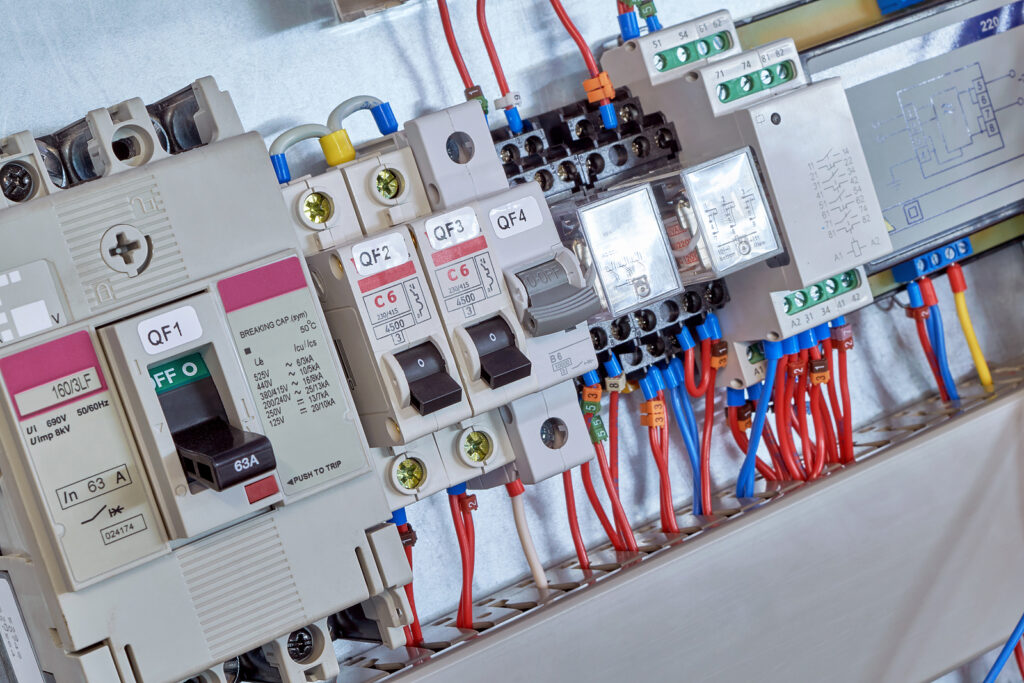
What Is Going On Here?
A circuit breaker performs two related but distinct functions. It protects wiring from sustained overload, which would cause conductors to overheat over time, and it protects the circuit from short circuits, where current finds an unintended low-resistance path and flows at dangerous levels. Standard overload protection involves the breaker detecting heat and tripping after some seconds or minutes of sustained excess current. Short circuit protection is nearly instantaneous, responding to the sudden massive current surge that a direct short creates.
When a breaker trips immediately upon reset with no connected load, it is responding to a hard fault, a persistent low-resistance connection between the hot conductor and either the neutral or the ground that exists regardless of whether any devices are plugged in or switched on. The fault is not in the appliances on the circuit. It is in the circuit itself, in the wiring inside the walls, in the panel, or in the breaker’s internal mechanism. Understanding which of these three locations the fault occupies determines the appropriate repair.
What Causes It?
Four conditions cause a circuit breaker to trip immediately upon every reset attempt, each with a different location and repair scope.
A Short Circuit in the Circuit Wiring
When the hot and neutral conductors inside a wall or junction box make direct contact, or when the hot conductor contacts the grounded metal of an outlet box or conduit, the circuit path has essentially zero resistance, allowing current to surge to levels that trip the breaker in milliseconds. Short circuits in wiring can result from physical damage to the wire insulation, a nail or screw driven through a wall that pierced a conductor, a junction box connection that has come apart, or rodent damage in attic or crawl space wiring runs. This is the most common cause of an immediate re-trip.
A Failed Circuit Breaker with Internal Short
Circuit breakers contain internal mechanical and thermal components that can fail after decades of service. A breaker that has tripped under repeated overload events, has experienced moisture exposure, or is simply at the end of its life can develop an internal failure that causes it to trip at or below its rated threshold, including immediately upon reset. This means the breaker is the fault source rather than anything connected to the circuit it protects. Replacing the breaker resolves the issue when the circuit wiring tests clean.
A Ground Fault at a Specific Outlet or Junction Box
A wiring connection at a specific outlet, switch, or junction box on the circuit where the hot conductor has made contact with the box ground or the grounded outlet body creates a fault that the breaker detects instantly. This type of fault is specific to one location on the circuit and can sometimes be isolated by identifying which box contains the fault through systematic disconnection of circuit segments.
A Failed Appliance Creating a Hard Short
This cause is distinguishable from the others because the immediate re-trip happens only when the specific appliance is plugged in and not when the outlet itself is tested with a different device. An appliance with a burned-out motor winding, a failed heating element that has shorted to its housing, or a cord with damaged insulation creating contact can produce an immediate breaker trip that resolves completely when that appliance is removed from the circuit.
Warning Signs to Watch For
The circumstances of the immediate re-trip provide important diagnostic information before a licensed electrician performs a full circuit evaluation.
- The breaker trips immediately when reset with no appliances plugged in anywhere on the circuit, which eliminates appliance fault as the cause
- The breaker trips with one specific appliance connected but holds when that appliance is removed and any other device is substituted
- A burning smell accompanies the immediate trip, suggesting the fault has generated enough heat to begin degrading insulation
- The breaker feels warm or hot to the touch relative to surrounding breakers before being reset, suggesting an internal component issue
- The circuit that tripped has recently had physical work done in a wall or ceiling that the circuit serves, which may have damaged a conductor
- Multiple circuits on the same panel are tripping simultaneously, suggesting the fault may involve the panel’s neutral bar or a shared wiring segment
DIY vs. Professional: What You Can Check Yourself
There is one diagnostic step a homeowner can safely perform and a clear boundary beyond which professional assessment is required.
What You Can Safely Check
Unplug every appliance, device, and lamp on the affected circuit. Turn off or unplug everything at every outlet in the circuit. Then attempt a single, careful reset of the breaker. If the breaker holds with nothing connected, the fault is in an appliance. Reconnect devices one at a time until the breaker trips again, identifying the specific appliance as the fault source. If the breaker trips immediately with absolutely nothing connected on the circuit, the fault is in the wiring, the outlets, or the breaker itself. Do not attempt to reset the breaker more than once after confirming nothing is connected. Call a licensed electrician.
When to Call a Licensed Electrician
An immediate re-trip with no connected load requires a licensed electrician to isolate the fault location by systematically disconnecting circuit segments at accessible junction boxes, testing for continuity between hot and neutral or hot and ground conductors, and using appropriate metering to confirm whether the breaker itself has failed internally. This diagnostic process involves testing live circuits and opening outlet boxes with the panel breaker off, which requires proper training, tools, and protective equipment. Working inside a panel to test or replace a breaker involves live components that remain energized from the utility service even with the main breaker off.
Solutions
Once the fault location is confirmed, the repair scope becomes clear.
Breaker Replacement When Internal Failure Is Confirmed
When systematic testing confirms the circuit wiring is clean and the fault is in the breaker itself, replacing the individual breaker with a correctly rated replacement resolves the condition. We confirm the circuit tests properly after replacement before restoring loads to the circuit.
Wiring Repair at the Fault Location
When the fault is traced to a specific wiring location, such as a junction box with a loose or failed connection, a section of conductor with damaged insulation, or an outlet box where conductors have made unintended contact, we repair the specific fault using code-compliant methods and test the circuit from panel to endpoint before closing the permit.
Outlet or Device Replacement
When the fault is at a specific outlet or switch whose internal components have failed and are conducting between hot and ground, we replace the device and test the outlet for correct function, ground integrity, and current draw before restoring the breaker.
Appliance Removal and Inspection
When the fault is confirmed in a specific appliance, removing the appliance from service resolves the immediate circuit issue. The appliance should be professionally inspected or replaced before being used again, since the condition that caused the short circuit may also present a shock or fire risk when the appliance is energized outside the circuit’s protection.
Why This Matters for Dallas-Fort Worth Homeowners
DFW’s late summer season creates elevated electrical fault risk for a combination of reasons that converge in August. The sustained high-load operation of air conditioning for weeks at a time stresses wiring connections throughout the home, while the extreme attic temperatures that North Texas summer produces can accelerate insulation degradation in wiring routed through unconditioned attic spaces. A wiring fault that might take another decade to develop under mild usage and temperature conditions can present in August when the insulation that has been gradually losing its integrity fails under the combination of sustained current and ambient heat stress.
Our electricians respond to immediate re-trip calls throughout the National Weather Service Fort Worth service area, which includes Fort Worth, Haltom City, Dallas, and surrounding communities. We arrive with the tools to systematically isolate faults in wiring that runs through walls and attic spaces, diagnose whether the fault is at a specific connection point or in a wiring run itself, and complete the repair with the appropriate permit and inspection where the scope requires one.
Frequently Asked Questions: Circuit Breaker Trips Immediately Every Time You Reset It
Why does a circuit breaker trip immediately when reset?
An immediate re-trip indicates a hard fault on the circuit, where the hot conductor has made low-resistance contact with the neutral or ground, allowing current to surge the moment power is restored. This is different from a thermal trip, which occurs after sustained overload, and will continue every time the breaker is reset until the fault is located and corrected.
Is it safe to keep resetting a breaker that trips immediately?
No. Repeated resets against an active short circuit push current through the fault point repeatedly, each time generating a surge of heat at the fault location. This accelerates insulation damage and increases the risk of the fault developing into a fire condition. Reset the breaker no more than two times and call a licensed electrician.
How do I know if the problem is in the appliance or the wiring?
Unplug everything on the circuit and reset the breaker. If it holds with nothing connected, the fault is in an appliance. Plug in devices one at a time until the trip recurs to identify the specific appliance. If the breaker trips immediately with nothing connected at all, the fault is in the circuit wiring, an outlet or junction box, or the breaker itself.
Can a circuit breaker fail and trip itself without a real fault?
Yes. A breaker with internal component failure can trip at or well below its rated threshold, including immediately upon reset, even when the circuit wiring is completely clean. A licensed electrician can distinguish between a wiring fault and a failed breaker through systematic circuit testing before replacement.
Is an immediate re-trip the same as a normal breaker trip?
No. A normal breaker trip under overload happens after the breaker has detected sustained excess current, which is its normal thermal protection function. An immediate re-trip the moment power is restored, especially with no load connected, indicates a short circuit or internal breaker failure rather than an overload condition.
Can physical work in a wall cause a circuit to trip immediately?
Yes. A nail or screw driven through a wall during renovation that pierces a wire insulation creates a short between conductors or between a conductor and the grounded stud. The resulting fault causes immediate breaker trips every time the circuit is reset until the conductor damage is located and repaired.
Does a burning smell with an immediate breaker trip mean I need panel replacement?
Not necessarily. A burning smell at the specific fault location, such as at an outlet or in a wall section, indicates the fault has generated heat that degraded nearby insulation. Panel replacement is generally not required unless the fault is inside the panel itself or the panel has pre-existing damage or brand-related concerns.
Why would multiple circuits trip simultaneously?
Multiple circuits tripping at the same time can indicate a fault on the neutral bar, a fault in the main service wiring, a significant power surge from the utility, or a fault in wiring that is shared between circuits upstream of their individual breakers. This situation requires immediate professional assessment rather than individual circuit troubleshooting.
Can a loose wire in an outlet cause an immediate breaker trip?
Yes. A wiring connection in an outlet box where the hot conductor has become loose enough to contact the grounded metal of the box creates a ground fault that trips the breaker immediately when the circuit is reset. This is one of the most common wiring-level causes of immediate re-trips in DFW homes with aging outlet connections.
How does DFW summer heat affect wiring faults?
Sustained high current during peak AC operation and high ambient temperatures in attic wiring runs accelerate the degradation of wire insulation. Wiring that has been gradually losing insulation integrity over years can develop an active fault in August when the combination of sustained current and attic heat exceeds what the remaining insulation can withstand.
What tools does a licensed electrician use to find a wiring fault?
Licensed electricians use clamp meters to measure current at panel breakers, insulation resistance testers to identify degraded insulation between conductors, and systematic disconnection of circuit segments to isolate the fault location to a specific section of wiring or specific junction box. These tools require training to interpret correctly and safely.
Can Tarrant Electric repair circuits where a nail pierced a wire?
Yes. When a conductor has been damaged by a fastener in a wall or ceiling, we locate the specific damage point, repair or replace the affected conductor section using code-compliant splicing or wire replacement methods, and confirm the circuit tests correctly before restoring the breaker.
Does a new breaker replacement always fix an immediate re-trip?
Only if the breaker itself was the fault source. If the wiring or an outlet on the circuit has the fault, a new breaker will trip immediately in the same way the old one did. Our electricians test the circuit before and after breaker replacement to confirm the fault was in the breaker rather than assuming it was.
Does Tarrant Electric provide emergency circuit repair in DFW?
Yes. An immediate re-trip that has left a circuit non-functional is a genuine service need, and we provide same-day and 24-hour emergency response throughout Dallas, Fort Worth, Haltom City, and the surrounding DFW area. Call 817-428-4404 any time and we will work to dispatch a licensed electrician as quickly as possible.
How do I schedule circuit breaker assessment in DFW?
Call 817-428-4404 or schedule online. Let us know which circuit is tripping immediately, what was on the circuit when it first tripped, and whether it trips with no load connected, and we will arrange a diagnostic visit at your Dallas, Fort Worth, or Haltom City area home.
When to Call Tarrant Electric
A breaker that trips immediately upon reset should not be reset again after two unsuccessful attempts. Repeated resets against an active short circuit stress both the breaker mechanism and the wiring, increasing the risk of heat damage at the fault point and reducing the breaker’s ability to protect the circuit. Call Tarrant Electric at 817-428-4404 to schedule a diagnostic visit. We provide electrical repair and panel services throughout Dallas, Fort Worth, Haltom City, and the surrounding DFW communities 24 hours a day.
With a 4.9-star Google rating across more than 95 reviews, our licensed electricians identify the fault location through systematic circuit testing and repair it correctly rather than replacing the breaker and hoping the circuit clears, which is the approach that works only if the breaker was itself the fault source and produces a second immediate re-trip if the fault is elsewhere.
Take the Next Step
A circuit breaker that trips immediately upon reset has a specific, diagnosable fault that will not resolve through repeated resets. Tarrant Electric locates and corrects electrical faults throughout Dallas, Fort Worth, Haltom City, and the surrounding DFW area. Licensed under TECL-31627, fully bonded and insured, and available 24 hours a day for emergency electrical service. Call 817-428-4404 or schedule online today.