


Breaker Panel Repair or Replacement? How DFW Electricians Make the Call
Repair a breaker panel when one part has failed and the rest is sound, and replace it when heat damage, corrosion, unavailable breakers or a lack of capacity make the panel itself the problem. Our team inspects the panel and the load first, then handles either path through panel and breaker replacement across Dallas-Fort Worth. Our licensed team (TECL-31627) stays fully bonded and insured and takes emergency calls 24/7. You can check our 4.9-star Google rating from 95+ reviews beside customer comments on our Yelp reviews and Facebook business.
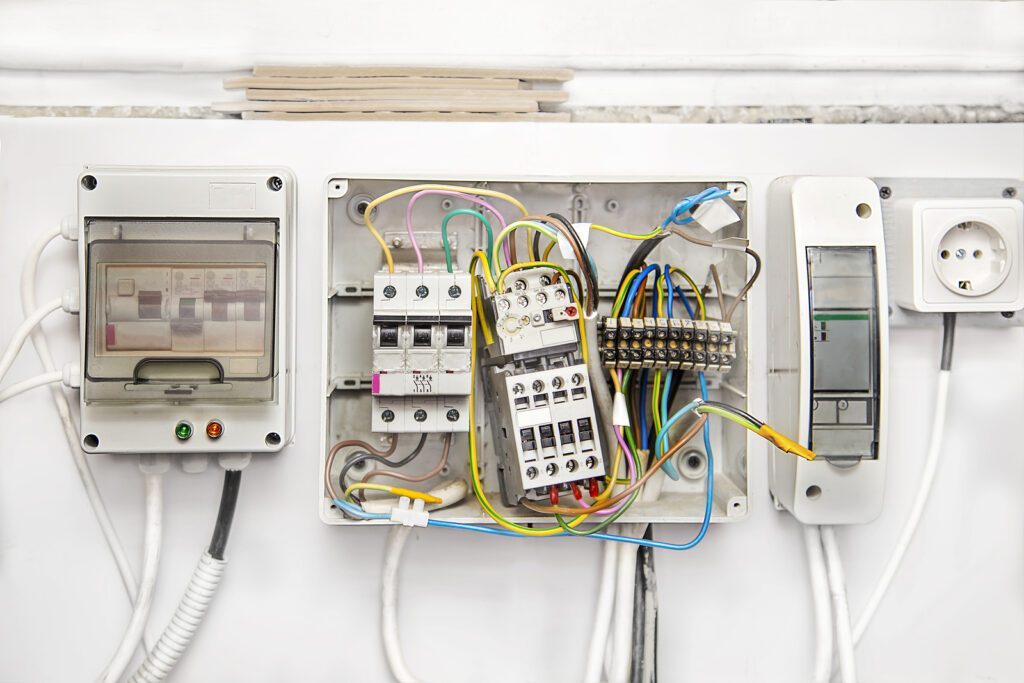
This guide walks through the seven checks DFW electricians run, a repair-or-replace table and what each path involves. You will know what to expect before the first visit. Call 817-428-4404 for a panel inspection before you decide.
Panel Repair vs. Panel Replacement: What Each One Means
A panel repair fixes one failed part inside a panel that is otherwise sound. Common repairs include replacing a worn breaker, tightening a loose lug, swapping a damaged cover and correcting a double-tapped breaker.
A panel replacement removes the old panel, installs a new enclosure with a new main breaker and branch breakers, and reconnects every circuit. A replacement can keep the same service rating or step up to a larger one, and a step up also involves the meter base, the service conductors and the utility.
The choice rests on the condition of the panel, the capacity of the service and the availability of matching parts, not on the age of the panel alone.
What Causes Panel Problems in DFW Homes
Panel problems trace back to a short list of causes.
Loose Connections and Heat
Every wire in a panel clamps under a lug or terminal. Over years of heating and cooling, a clamp can loosen, resistance rises and the connection runs hot. The Electrical Safety Foundation International (ESFI) lists a hot odor from insulation and switch plates or receptacle covers that feel hot to the touch among the signs that call for a licensed electrician.
Worn Breakers
A breaker is a mechanical device, and years of switching and repeated trips wear it. A worn breaker may trip at lower loads, feel loose in the panel or fail to trip as designed. Our guide to a breaker that trips immediately every time you reset it explains what a nonstop tripper means.
More Load Than the Panel Was Built For
Dallas-Fort Worth homes add central air conditioning, EV chargers, hot tubs, workshops and kitchen appliances over time, and every addition draws from the same panel. ESFI recommends an inspection for a home that is 10 or more years old and has had a major renovation, an addition or a major new appliance. A panel that runs out of breaker spaces often fills with tandem breakers and double-tapped wires.
Moisture, Pests and Outdoor Exposure
Outdoor panels, meter bases and air conditioner disconnects face rain, sprinkler overspray and insects. Texas A&M fire ant guidance for electrical equipment notes that fire ants chew insulation, can cause short circuits and carry soil into electrical boxes, where it corrodes parts and interferes with maintenance. Ants can enter openings as small as the diameter of a paper clip wire, so small gaps in a cover or conduit matter.
Past Changes and Older Brands
Do-it-yourself and unpermitted changes leave behind breakers rated higher than the wire they protect, which ESFI calls an overrated panel, along with double-tapped breakers. Older brands add a separate concern that Check 1 below covers.
Warning Signs a Panel Needs an Electrician’s Attention
Any of these signs justifies a call to a licensed electrician.
- Breakers trip often, feel loose in the panel or will not reset.
- Lights dim or flicker when a large appliance starts.
- The panel hums, buzzes or crackles.
- The panel cover, a breaker or the wall around the panel feels warm.
- A hot-plastic or burning odor comes from the panel. Our guide to a burning smell from your electrical panel lists what to do today.
- Rust, water marks, soil or insect nests show up in or around the panel.
- Brown or black marks appear on the cover, a breaker or the visible wires.
- No breaker spaces remain open, or tandem breakers fill the panel.
- The home is 40 or more years old and no electrician has inspected the panel, which is the age ESFI sets for an inspection.
DIY vs. Professional: What Homeowners Can and Cannot Do
What You Can Do Yourself
Observation is safe and helps the electrician. Leave the inner cover and everything behind it alone.
- Write down which breakers trip, what was running at the time and any sound or smell.
- Photograph the label inside the panel door, which shows the brand, model and rating.
- Photograph rust, water marks, insect activity or discoloration you can see on the outside.
- Count the open breaker spaces you can see and list the large loads you plan to add.
What Needs a Licensed Electrician
Everything behind the inner cover belongs to a licensed electrician: breakers, lugs, bus bars, the main breaker and the conductors. Even with the main breaker off, the conductors that feed the main stay energized from the utility side.
The City of Dallas electrical guide allows homeowners to do their own electrical work only after they prove homestead ownership and occupancy and satisfy the city’s examination requirement, and other cities set their own rules. Most homeowners hand panel work to a licensed electrician because one mistake affects the whole home.
Seven Checks DFW Electricians Run Before They Call It
Electricians weigh seven findings, and no single one decides the call by itself.
Check 1: Brand, Model and Breaker Availability
The label inside the panel door names the manufacturer, the model and the breakers that fit that panel. Code requires installers to follow the equipment’s listing and labeling, so a replacement breaker must match the panel. Breakers that match the panel, plus a brand with no known concerns, keep a repair on the table. A panel with no matching breakers available, or one of the older brands in our guide to Federal Pacific and Zinsco panels, points toward replacement.
Check 2: Heat Damage at the Bus Bars and Connections
Heat leaves marks: discolored or melted insulation, scorched bus bars and pitted lugs. One loose lug on an otherwise clean bus is a repair, because the electrician tightens the connection to the manufacturer’s specification and replaces the damaged wire end. Damage to the bus bars or the enclosure points the other way, since those parts are not a field repair in most panels.
Check 3: Capacity Against the Load
A healthy panel can still be too small. The electrician adds up the loads (central air, range, dryer, water heater, hot tub) and compares them with the service rating and the open breaker spaces. A panel with room for the load stays a repair. A full panel, or a service that runs near its rating, points to replacement or a service upgrade, which matters most when you plan an EV charger installation or another large load.
Check 4: Breaker Fit, Wear and Past Changes
A breaker that feels loose, trips too easily or will not reset is a repair. The electrician also looks for double-tapped breakers, tandem breakers in slots that do not allow them and breakers rated higher than the wire they protect. The electrician can usually correct a few of these items. A panel full of them often needs replacement because the circuits have outgrown it.
Check 5: Fault History and Pattern
One trip after a storm or a power surge points to a repair, while breakers that trip across several circuits point to a wider problem. Lights that flicker, a panel that buzzes or repeated trips on the same circuit narrow the search to a loose connection, a worn breaker or an overload. Our guide to panel replacement after storm damage lists what electricians check first after a storm.
Check 6: Moisture and Corrosion
Surface rust on a cover is a repair: the electrician cleans or replaces the cover and seals the entry point. Corrosion on the bus bars or breakers, or a panel that took on water, usually means replacement, because corroded parts no longer carry current reliably. The electrician clears pest nests from an outdoor panel and checks the insulation and connections for damage before deciding.
Check 7: Code Status and Permit History
Older work often predates current code, and unpermitted additions surface during an inspection. A replacement brings the service equipment up to current code, including a surge protective device, because NEC 230.67 calls for surge protection where an electrician replaces service equipment at a dwelling. A repair fixes the problem at hand and leaves the rest of the panel as it is. Our guide on panels when selling or remodeling explains how buyers and inspectors view them.
Repair or Replace at a Glance
| What the electrician finds | Usual call | Reason |
|---|---|---|
| One breaker is loose, worn or will not reset | Repair | The panel is sound and a matching breaker is available |
| One loose lug with no heat marks on the bus | Repair | A lug torqued to specification restores the connection |
| Surface rust on the cover, dry and clean inside | Repair | A cleaned or new cover and a sealed gap solve it |
| Heat-darkened or melted bus bar or enclosure | Replacement | Bus bars and enclosures are not a field repair in most panels |
| No matching breakers available for the panel | Replacement | Code requires breakers that fit the panel |
| Corrosion or water inside the enclosure | Replacement | Corroded parts no longer carry current reliably |
| Panel full, or load near the service rating | Replacement or service upgrade | A repair cannot add capacity |
| Older brand with known breaker concerns | Replacement | Our Federal Pacific and Zinsco guide explains why |
| Many double-tapped or overrated breakers | Replacement | The circuits have outgrown the panel |
Repair Path vs. Replacement Path
What a Panel Repair Involves
- Inspect: the electrician reads the label, checks the bus bars, lugs and enclosure, and tests the breakers and connections.
- Diagnose: the electrician matches the symptom to its cause, such as a loose lug, a worn breaker or an overloaded circuit.
- Repair: the electrician installs a matching breaker, tightens the connections to the manufacturer’s specification or corrects the wiring fault.
- Verify: the electrician tests the circuit under load and confirms the breaker trips and resets as designed.
- Document: the electrician labels the circuits and explains any capacity, age or code concerns that a repair does not cover.
Pros: a smaller scope and a shorter power interruption than a replacement. Limits: a repair leaves the panel’s age, capacity and code gaps as they are. For a single failed outlet, switch or fixture, our electrical repair service covers the fix.
What a Panel Replacement Involves
- Inspect and calculate: the electrician inspects the panel and runs a load calculation to choose the new panel size.
- Plan and permit: the electrician confirms the permit requirement with your city and files the permit.
- Coordinate power: the electrician arranges the disconnect and reconnect with your retail electric provider or Oncor when the work requires it.
- Replace: the electrician installs the new panel, main breaker and branch breakers, reconnects each circuit and updates the grounding and bonding.
- Protect: the electrician adds the surge protective device that code calls for on replaced service equipment.
- Label and test: the electrician labels every circuit and tests the breakers.
- Inspect: the city inspector reviews the installation.
- Restore: Oncor reconnects service where the work required a disconnect, and in areas with a city inspection requirement, it does so after the city confirms the work passed.
Pros: new bus bars and breakers, capacity for current loads, surge protection and an inspected installation. Limits: a larger scope, a permit and inspection, utility coordination and a longer power interruption. A professional electrical inspection gives you the findings before you commit to either path.
Panel Repair and Replacement Across Dallas-Fort Worth
Dallas-Fort Worth panels work hardest in summer. The National Weather Service in Fort Worth lists July 1 as the average first 100-degree day at DFW and August 27 as the average last one, and the record is 71 such days in 2011. Central air conditioners run for long stretches across that span, so a loose connection or a tired breaker shows up under sustained load. Our guide on summer heat and heavy appliance loads explains how the load builds.
Oncor delivers power to Dallas, Fort Worth and many surrounding communities. Oncor’s meter FAQ states that the customer owns the meter base and the wiring in it, while Oncor owns the pole, the transformer and the service line. For a damaged meter base, Oncor’s storm repair guidance describes the order. A licensed electrician makes the repair, the city inspects the work in areas that require it and confirms the result to Oncor, and Oncor then reconnects service.
Permit rules differ by city, and the City of Fort Worth permit guide states that changing, moving or repairing electrical requires an electrical permit. The Dallas guide exempts a like-for-like replacement of an existing circuit breaker when the electrical service and service disconnect stay the same, within limits the guide sets. A panel replacement usually involves the service disconnect. Your electrician confirms the requirement for your address and handles the permit and inspection.
Our panel work reaches homeowners across Tarrant County and the wider DFW area, with local pages for Arlington panel replacement, Irving panel replacement, Grand Prairie panel replacement and Southlake panel replacement.
Frequently Asked Questions
Should I repair or replace my breaker panel?
Repair fits when one component has failed and the enclosure, bus bars and brand are in good condition. Replacement fits when the panel itself is the problem: heat-damaged bus bars, corrosion, no matching breakers, no spare capacity or a brand with known concerns. A licensed electrician inspects the panel and the load before making the call.
Can an electrician replace just one bad breaker instead of the whole panel?
Yes, when the panel is sound and a matching breaker is available. The electrician also checks the connection and the bus for heat marks, because a bad breaker sometimes points to a loose connection. A breaker swap leaves the panel’s age and capacity unchanged.
Which panel problems are usually repairable?
A worn or loose breaker, a loose lug without heat damage, a damaged cover and a mislabeled circuit directory usually fall under repair. An electrician can also correct a few double-tapped or wrong-size breakers. Each of these fixes assumes the bus bars and the enclosure have no damage.
Which panel problems mean replacement?
Heat-damaged bus bars, corrosion or water inside the enclosure, breakers you can no longer match to the panel and brands with documented concerns usually mean replacement. A full panel or an overloaded service points the same way when the home needs more capacity.
How old is too old for a breaker panel?
Age alone does not decide it. ESFI advises an electrical inspection for any home that is 40 or more years old, or 10 or more years old with a major renovation, an addition or a major new appliance. Electricians then judge the panel by its condition, brand and capacity rather than a calendar date.
Why is my breaker panel buzzing, humming or warm?
A buzzing sound, a warm cover or a hot-insulation smell can come from a loose connection, a failing breaker or an overloaded circuit. ESFI lists unusual sounds, a hot odor and hot-to-the-touch covers among the signs that call for a licensed electrician. Leave the panel interior closed and call an electrician.
Can I replace a breaker myself in Texas?
Dallas lets homeowners do their own electrical work only after they prove homestead ownership and occupancy and satisfy the city’s examination requirement, and other cities set their own rules. The panel interior also stays energized from the utility side even when the main breaker is off. Most homeowners leave breaker and panel work to a licensed electrician.
Does a panel repair or replacement need a permit in Dallas or Fort Worth?
Fort Worth’s guide states that changing, moving or repairing electrical requires an electrical permit. Dallas exempts a like-for-like replacement of an existing circuit breaker that involves no change to the electrical service or service disconnect, within limits its guide sets, while a panel replacement usually involves the service disconnect. Your electrician confirms the requirement and files the permit.
Who disconnects and reconnects the power during a panel replacement?
Your electrician coordinates the disconnect and reconnect with your retail electric provider or Oncor, depending on the work involved. Oncor owns the pole, the transformer and the service line, and you own the meter base and the wiring in it. In areas where the city requires an inspection, Oncor restores service after the city confirms that the work passed.
How long will the power stay off during a panel replacement?
The length depends on the scope, the permit and the utility’s scheduling, so your electrician gives you a plan before work begins. A like-for-like panel swap usually interrupts power for less time than a service upgrade that includes the meter base. Plan for refrigeration and home office equipment while the power is off.
Does a new panel include surge protection?
Yes, in most cases. NEC 230.67 calls for a surge protective device where an electrician replaces service equipment at a dwelling, and the electrician installs it with the new panel. The device helps protect electronics from surges that reach the panel.
Will a new panel stop my breakers from tripping or my lights from flickering?
Only when the panel is the cause. Overloaded circuits, loose connections elsewhere, worn outlets and utility-side issues can produce the same symptoms. The electrician traces the cause before recommending a replacement, so you pay attention to the right part of the system.
Should I upgrade my panel before adding an EV charger, hot tub or heat pump?
A load calculation answers that question. An EV charger, hot tub or heat pump adds a large load, and an older or full panel may lack the capacity or the breaker space. The electrician adds a subpanel or upgrades the service when the calculation shows a shortfall.
What code applies to my panel replacement?
Your city enforces the National Electrical Code edition and the local amendments it has adopted, and the permit and inspection follow those rules. A licensed electrician tracks the current edition and applies it to your job. Ask your electrician which edition the city enforces before work begins.
How do I schedule a panel inspection with Tarrant Electric?
Reach us at 817-428-4404 or schedule online, then share the panel brand, what trips and any signs you have noticed. Our licensed electricians cover Tarrant County and the wider DFW area, with emergency response around the clock. We inspect the panel, run the load calculation and walk you through a repair or a replacement before any work starts.
When to Call Tarrant Electric
Call Tarrant Electric when breakers trip across several circuits or when a panel feels warm, hums or smells like hot plastic. Call as well when you plan an EV charger, a hot tub or an addition and want to know whether the panel can carry it. Our electricians inspect the panel, run the load calculation and tell you plainly whether a repair or a replacement fits, with the reasons behind the call.
Our panel work across Tarrant County and the wider DFW area falls under license TECL-31627, and our crews take emergency calls 24/7. A panel with heat marks or a burning odor deserves a call right away at 817-428-4404.
Why DFW Homeowners Choose Tarrant Electric
| What We Offer | What It Means for You |
|---|---|
| Licensed Electrical Contractor (TECL-31627) | Our licensed team follows Texas state licensing standards on every project |
| Fully Bonded and Insured | Our bond and insurance cover your property and our crew on every job |
| 24/7 Emergency Electrical Service | Help is available any time, day or night |
| 4.9-Star Google Rating, 95+ Reviews | A consistent track record from customers across the DFW area |
| 100 Percent Satisfaction Guarantee | We stand behind every job until you feel fully satisfied with the result |
| Clear Scope and Options Before Work Begins | You review the plan and approve it before any work starts |
Read what customers across Dallas-Fort Worth say about working with us on our Google Business Profile, Yelp and Facebook.
Take the Next Step
Tarrant Electric inspects, repairs and replaces breaker panels across Tarrant County, Dallas and the wider DFW area. Our licensed team (TECL-31627) is fully bonded and insured, with 24/7 emergency service when a panel acts up. Call 817-428-4404 or schedule online for a panel inspection and a clear repair-or-replace recommendation.