


Can a Texas HOA Block Your Standby Generator? What Property Code 202.019 Says
Generally, no: Texas Property Code Section 202.019 bars an HOA from prohibiting a permanently installed standby generator that meets the statute’s definition, but the association can still regulate how you install and operate it. Our team plans and installs these systems through residential generator installation across Dallas-Fort Worth, so the equipment, location and permits fit both the statute and your association’s written rules. Our electricians hold license TECL-31627, stay fully bonded and insured and answer emergency calls around the clock, 24/7. Customers describe their experience through our 4.9-star Google rating, our Yelp listing and our Facebook.
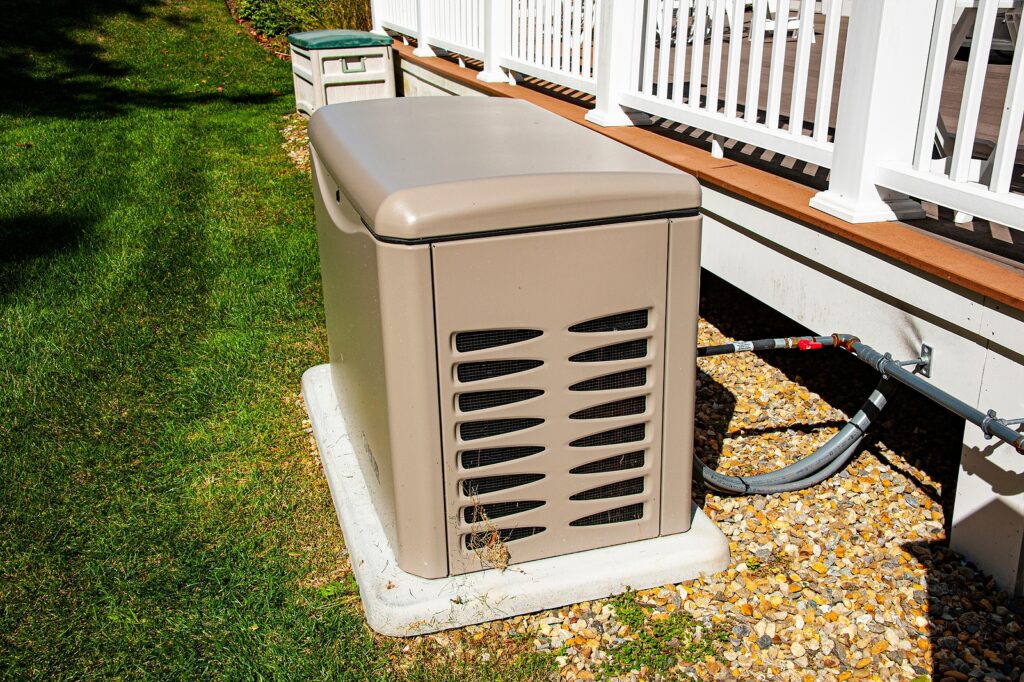
This guide explains what the statute covers, what an HOA can and cannot require, how to handle an approval request and what to do after a denial. It is general information, not legal advice, so ask a Texas attorney about a specific dispute. Call 817-428-4404 to plan a generator installation that fits your association’s rules.
What Texas Property Code 202.019 Says
Section 202.019 came from House Bill 939 in 2015, and it applies to a covenant or rule whether the association adopted it before, on or after the bill’s effective date, according to the enrolled bill text. The statute text on FindLaw lists the current wording. The protection centers on a standby electric generator that meets four conditions.
| Condition | What the statute requires |
|---|---|
| Fuel | Natural gas, liquefied petroleum gas, diesel fuel, biodiesel fuel or hydrogen |
| Enclosure | Fully enclosed in an integral, manufacturer-supplied sound attenuating enclosure |
| Connection | Connected to the main electrical panel of a residence by a manual or automatic transfer switch |
| Size | Rated for a generating capacity of not less than seven kilowatts |
A unit that meets all four conditions and has a permanent installation gets the statute’s protection. A portable generator, a unit rated under seven kilowatts, an unenclosed unit or a unit without a transfer switch falls outside it, so the HOA’s own rules still govern those.
Subsection (b) holds the core rule. Except as the section allows, an association may not adopt or enforce a provision that prohibits, restricts or has the effect of prohibiting or restricting an owner from owning, operating, installing or maintaining a permanently installed standby generator.
What an HOA Cannot Do and What It Can Still Require
What the Statute Blocks
The statute limits an association in five ways.
- No ban or effective ban. The association cannot adopt or enforce a rule that prohibits or restricts a qualifying generator (subsection (b)).
- No unreasonable enforcement. The association must apply and enforce the permitted rules reasonably (subsection (d)).
- No overreaching location rules. A location rule becomes unenforceable when it adds more than 10 percent to the installation expense or more than 20 percent to the electrical or fuel line connection expense (subsection (e)).
- No withheld approval. When the governing documents require approval, the association may not withhold it if the proposed installation meets or exceeds the permitted provisions (subsection (f)).
- No heavier application. The association may not ask for more or more detailed information than it asks for other exterior improvements (subsection (g)).
What the Statute Lets an HOA Require
Subsection (c) lists the rules an association may adopt and enforce for installation and operation.
- Installation and maintenance that follow the manufacturer’s specifications and the applicable health, safety, electrical and building codes.
- Licensed contractors for the electrical, plumbing and fuel line connections.
- Fuel lines that follow governmental codes, propane installations that follow Railroad Commission of Texas rules and fuel tanks that follow zoning ordinances.
- Maintenance in good condition, plus repair, replacement or removal of deteriorated parts.
- Screens around the generator when it shows from the street the dwelling faces, from an adjoining residence or association property across an unfenced side or rear yard, or through a wrought iron or residential aluminum fence.
- Reasonable testing times that match the manufacturer’s recommendations.
- A ban on using the generator to supply all or substantially all of the home’s power, except when utility power is unavailable or intermittent for reasons other than nonpayment.
- Location rules within the 10 and 20 percent limits, and a ban on placing the generator on property the association owns or maintains.
Where HOA Generator Disputes Start
Disagreements about generators usually center on a short list of points.
- Noise. The statute already requires a sound-attenuating enclosure, and the association may set reasonable testing times that follow the manufacturer’s recommendations.
- Appearance. The association may require screening in the situations subsection (c) describes.
- Location. The association may regulate location, and the city’s setbacks apply on top of that. The City of Dallas backup generator checklist notes that residential backup generators cannot sit in a required side yard or an easement. Our guide to the best locations for residential generator installation covers placement for access and safety.
- Older covenants. A rule that bans generators and predates 2015 does not escape the statute, because the law covers rules adopted before, on or after its effective date.
- Equipment outside the definition. Portable units, units under seven kilowatts and units without a transfer switch stay under the association’s ordinary rules.
Red Flags in an HOA Generator Rule or Denial
These signs suggest a rule or a denial may conflict with the statute.
- The rules or a denial letter ban standby generators outright.
- The denial gives no written reasons or cites no rule from the permitted list.
- The association asks for more documents or detail than it asks for a fence or a patio.
- A location rule pushes the installation expense up by more than 10 percent or the connection expense up by more than 20 percent.
- The association sets testing hours that conflict with the manufacturer’s recommendations.
- The association asks you to prove your generator complies, when subsection (h) puts the burden of proof on the party asserting noncompliance.
DIY vs. Professional: Who Does What
What Homeowners Do Themselves
- Read the declaration, the architectural guidelines and any generator rule, and note what they require.
- Request the association’s standard exterior improvement application.
- Confirm the generator meets the four conditions: an eligible fuel, an integral sound attenuating enclosure, a transfer switch connection and a rating of at least seven kilowatts.
- Mark the proposed location on a plat or a site photo and note the screening plan.
- Submit the application and keep dated copies of everything you send and receive.
What Needs a Licensed Professional
The statute itself lets an association require licensed contractors for the electrical, plumbing and fuel line connections. A licensed electrician sizes the generator from a load calculation, installs the transfer switch and connects it to the main panel. A licensed contractor handles the gas or propane connection, and the city requires permits and inspections for the work. Panel capacity matters here, and our panel and breaker replacement service covers upgrades when a panel has no room for the transfer switch.
A Texas attorney who handles HOA matters advises on a dispute, a denial hearing or a conflict between older covenants and the statute. Electricians do not give legal advice, and this guide does not replace it.
Step-by-Step: Getting HOA Approval for a Standby Generator
- Read the governing documents: find the generator, screening and architectural approval rules in the declaration and the guidelines.
- Choose a qualifying generator: confirm the fuel type, the sound attenuating enclosure, the transfer switch connection and the seven-kilowatt rating.
- Plan the location and screening: pick a spot that meets the city’s setbacks and the association’s location and screening rules.
- Submit the standard application: use the same form the association uses for other exterior improvements and include only what that form asks for.
- Track the response: note the dates, keep copies and ask for written reasons when the answer is no.
- Respond to a denial: compare each reason with subsection (c), revise the plan where a reason holds up and request the board hearing on time.
- Permit and inspect: after approval, the licensed contractor pulls the city permits and schedules the inspections.
After a Denial
Section 209.00505 of the Property Code adds a denial process for associations that consist of more than 40 lots. The association must deliver the denial in writing, describe the basis in reasonable detail with any changes it requires for approval, and tell you that you may request a hearing within 30 days. The board then holds the hearing within 30 days of your request, gives you at least 10 days’ notice and may affirm, modify or reverse the decision, according to Section 209.00505.
| Option | Best when | Limit |
|---|---|---|
| Revise the plan to match the permitted rules | The denial cites a valid rule such as screening, location or testing | It may add screening or relocation work within the 10 and 20 percent limits |
| Request the board hearing | The denial gives weak reasons or cites no permitted rule | The request has a 30-day deadline, and the board decides first |
| Send a written request that cites Section 202.019 | A rule or a denial bans standby generators outright | It works best with the equipment details documented |
| Consult a Texas attorney | The association keeps refusing after a hearing | It adds time and a formal process |
Standby Generator Rules Across Dallas-Fort Worth
North Texas winter storms show why owners push for standby power. As of 6 p.m. on Saturday, January 24, the January 2026 winter storm had left just over 14,000 outages in Oncor’s service area, including 4,277 in Tarrant County, according to Fox 4’s live coverage. The same report noted that temperatures could stay below freezing until Tuesday afternoon. Our guides on the Texas power grid and backup generators and how a backup generator protects your family during outages explain the planning side.
Our electricians serve homeowners in association neighborhoods across Dallas-Fort Worth, including those who need residential generator installation in Southlake, residential generator installation in Colleyville and residential generator installation in Grapevine.
The HOA’s approval and the city’s permit are separate approvals, and you need both. The TDLR rule adoption notice records the adoption of the 2026 National Electrical Code as the Texas state electrical code effective September 1, 2026, and licensed electricians work to whichever edition and amendments your city adopts. Your electrician confirms the permits and inspections for your address before work begins.
Frequently Asked Questions
Can an HOA ban a standby generator in Texas?
Not outright. Section 202.019 bars an association from adopting or enforcing a rule that prohibits or effectively prohibits an owner from owning, operating, installing or maintaining a permanently installed standby generator. The association can still regulate installation and operation through the provisions in subsection (c), such as screening, location and testing times. The protection applies to a unit that meets the statute’s four-part definition.
What counts as a standby generator under Section 202.019?
The unit runs on natural gas, liquefied petroleum gas, diesel fuel, biodiesel fuel or hydrogen. It sits inside an integral manufacturer-supplied sound attenuating enclosure and connects to the home’s main electrical panel through a manual or automatic transfer switch. It also needs a rating of at least seven kilowatts, and a unit that misses any of the four conditions falls outside the statute.
Does the law cover portable generators?
No. The definition requires a transfer switch connection to the main panel, a manufacturer-supplied sound attenuating enclosure and a rating of at least seven kilowatts, which portable units typically do not meet. The association’s ordinary rules govern portable units.
Do I still need HOA approval before installing a standby generator?
Usually yes, when the governing documents require approval for exterior improvements. The statute says the association may not withhold approval when the proposed installation meets or exceeds the provisions subsection (c) permits. Submit the application before you buy equipment or schedule the installation.
Can an HOA require screening for a generator?
Yes, in three situations. The first is a generator that shows from the street the dwelling faces. The second is a generator in an unfenced side or rear yard that shows from an adjoining residence or association property. The third is a generator in a side or rear yard fenced with wrought iron or residential aluminum that shows through the fence from those places. Outside those situations, subsection (c) does not list screening as a permitted requirement.
Can an HOA tell me where to put the generator?
Yes, within limits. An association may regulate location and may bar placement on property it owns or maintains. A location rule becomes unenforceable when it adds more than 10 percent to the installation expense or more than 20 percent to the electrical or fuel line connection expense.
Can an HOA limit when I test my generator?
Yes, within reason. A rule can set reasonable testing times that follow the manufacturer’s recommendations. Ask your installer how often your model runs its self-test so you can match the hours your association allows.
Can an HOA require a licensed contractor to install the generator?
Yes. Subsection (c) lets an association require licensed contractors for the electrical, plumbing and fuel line connections. It also lets the association require installation that follows the manufacturer’s specifications and the applicable codes.
Can an HOA stop me from running the generator all the time?
To a point. Subsection (c) lets an association prohibit using the generator to supply all or substantially all of the home’s electrical power, except when utility power is unavailable or intermittent for reasons other than nonpayment. The generator exists for outages, so that limit rarely affects a standby installation.
What can I do if my HOA denies my generator application?
Ask for the reasons in writing and compare each reason with the provisions in subsection (c). Revise the plan where a reason holds up. For associations covered by Section 209.00505, you may request a board hearing within 30 days of the denial notice, and a Texas attorney can advise on further steps.
Who has to prove that a generator does not comply?
Subsection (h) puts the burden of proof on the party asserting noncompliance. That usually means the association when it claims a violation in a hearing, action or proceeding about a proposed or installed generator.
Does the law apply to HOA rules written before 2015?
Yes. The 2015 bill states that it applies to a covenant or rule adopted before, on or after its effective date. A decades-old rule that bans generators cannot override the statute for a qualifying unit.
Does the law apply to townhome and condo associations?
The statute applies to a property owners’ association, and Texas law defines that term to include associations for residential subdivisions, planned developments and condominium or townhouse regimes. In a condo, the location often decides the outcome because subsection (c) lets an association bar a generator from property it owns or maintains.
Does a city permit replace HOA approval?
No. The HOA approves the project under its governing documents, and the city approves the electrical, gas and building work under its codes. You need both, and neither one replaces the other.
How do I schedule a standby generator consultation with Tarrant Electric?
Contact our team at 817-428-4404 or schedule online, then share your neighborhood, your HOA’s generator rules and your preferred location. Our licensed team works across Dallas-Fort Worth and answers emergency calls 24/7. We size the generator, plan the transfer switch and the connection, and explain the installation details your HOA’s application asks for.
When to Call Tarrant Electric
Call Tarrant Electric when your HOA’s rules mention generators, when you plan a standby system and want the equipment, location and permits to fit those rules, or when a denial letter names a requirement you want to understand. Our electricians size the system, plan the transfer switch and the fuel connection and explain the installation details an application needs.
License TECL-31627 covers our generator work in Fort Worth, Dallas and the cities around them, and our crews answer emergency calls 24/7. Questions about your covenants belong with a Texas attorney, and the electrical side starts with a call to 817-428-4404.
Why DFW Homeowners Choose Tarrant Electric
| What We Offer | What It Means for You |
|---|---|
| Licensed Electrical Contractor (TECL-31627) | Our licensed team follows Texas state licensing standards on every project |
| Fully Bonded and Insured | Our bond and insurance cover your property and our crew on every job |
| 24/7 Emergency Electrical Service | Help is available any time, day or night |
| 4.9-Star Google Rating, 95+ Reviews | A consistent track record from customers across the DFW area |
| 100 Percent Satisfaction Guarantee | We stand behind every job until you feel fully satisfied with the result |
| Clear Scope and Options Before Work Begins | You review the plan and approve it before any work starts |
Browse reviews from homeowners across Dallas-Fort Worth on our Google Business Profile, Yelp and Facebook.
Take the Next Step
Tarrant Electric installs standby generators across Fort Worth, Dallas, Haltom City and neighboring cities, and we coordinate the gas connection, the permit and the inspection. Our crew holds license TECL-31627, is fully bonded and insured and stays on call for emergencies 24/7. Call 817-428-4404 or schedule online to plan a standby generator that fits your association’s rules.