


Does Your Texas Business Need a Backup Generator? Emergency vs Optional Power
Whether a Texas business needs a backup generator depends on two questions: does a code require backup power for specific systems in your building, and what would an outage do to your operations. Codes require emergency or legally required standby power for life safety and fire protection systems, and every other backup power need is an optional business decision. We plan and install these systems through commercial generator installation across Dallas-Fort Worth under license TECL-31627. Our team stays fully bonded and insured, answers emergency calls 24/7 and holds a 4.9-star Google rating, with more reviews on our Yelp profile and Facebook.
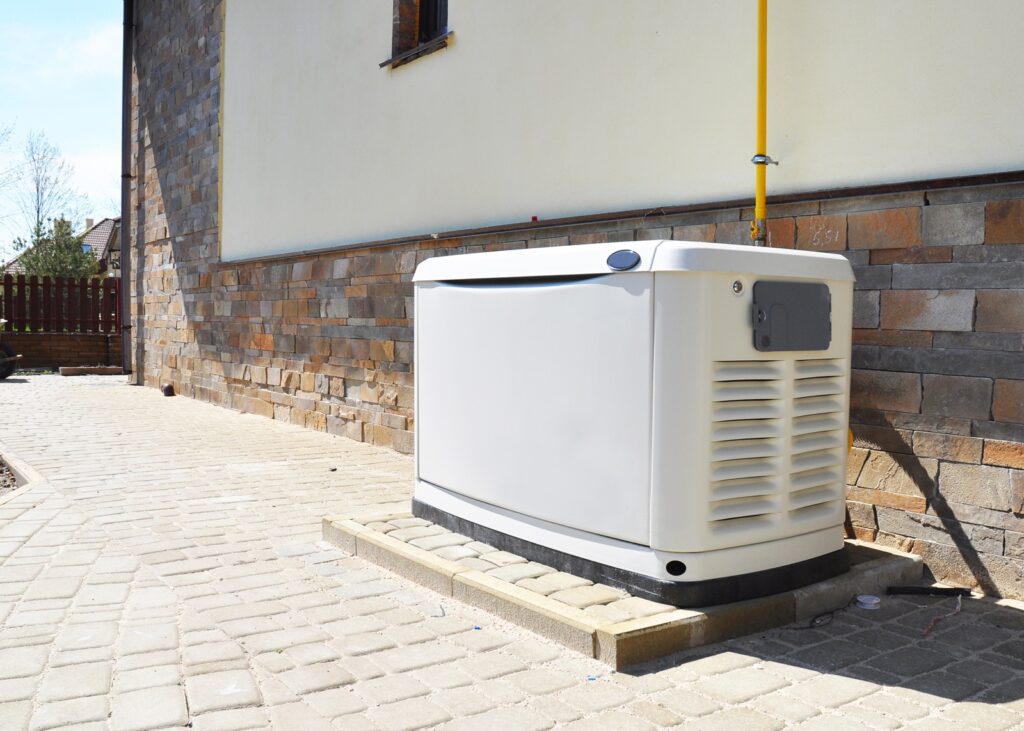
This guide explains the three classes of backup power in the National Electrical Code and how to find out which of your systems a code decides. It also covers how to plan optional backup power and what to bring to a planning visit. Call 817-428-4404 to talk through your building’s needs.
Emergency, Legally Required and Optional Standby Power: What Each One Means
The National Electrical Code sorts backup power into three classes, and the class decides who requires the system, how fast it must start and which loads it serves. The EC&M guide to emergency and standby systems and the IAEI article on commercial occupancies describe the same split.
| Class | Purpose | Typical loads | Start time | Who decides |
|---|---|---|---|---|
| Emergency (Article 700) | Supplies power and illumination essential for preserving human life | Fire detection and alarm systems, elevators, fire pumps, ventilation and public safety announcing systems | Within 10 seconds | A governmental agency with jurisdiction classes the system as emergency |
| Legally required standby (Article 701) | Supplies power to selected loads when a code or agency requires it | Refrigeration and heating systems, ventilation and smoke removal, sewage disposal and processes that could hamper rescue or firefighting | Within 60 seconds | A governmental agency classes the system as legally required |
| Optional standby (Article 702) | Supplies power where life safety does not depend on it | Data processing, industrial processes and other loads whose loss causes discomfort or economic loss | Fewer code requirements; the owner sets the goal | The owner decides, and no code or agency mandates it |
NFPA 110, the Standard for Emergency and Standby Power Systems, covers the installation, maintenance, operation and testing of emergency power supply systems. Together, the NEC articles and NFPA 110 set the rules for how an electrician designs, tests and maintains a code-required system.
What Decides Whether Your Business Needs a Generator
Three factors decide the answer, and the first one belongs to the code, not to you.
Fire and Building Codes and the Authority Having Jurisdiction
The International Building Code and fire codes typically specify which loads require backup power, and the authority having jurisdiction (AHJ) applies them to your building. Your city’s building and fire officials decide whether your occupancy needs emergency or legally required standby power for items such as fire alarms, fire pumps, smoke control and egress lighting. Ask for that determination in writing during design or before a tenant finish-out. Our guide on how LED retrofits support emergency and exit lighting systems covers the lighting side.
Health and Industry Rules
Some industries answer to rules outside the building code. North Richland Hills Consumer Health guidance, for example, classes an interruption of electrical service or the loss of major refrigeration as a condition that requires all food preparation and service on site to stop immediately. The operator must contact the department, according to its food establishment guidance. Ask the agency that regulates your business whether it expects backup power, and check whether your lease, lender or insurer sets conditions of its own.
Business Risk
When no code requires backup power, the decision comes down to what an outage does to the business: spoiled inventory, lost sales, interrupted data and idle staff. List the loads that must keep running, the hours you can operate without them and the products or records at risk. Then compare that list with the outage history in your area.
Signs Your Business Should Plan for Backup Power
Any of these signs means a backup power review belongs on your calendar.
- An outage would spoil refrigerated or frozen inventory.
- Point-of-sale terminals, phones, internet or data systems must stay up during business hours.
- A health authority, landlord, lender or insurer has asked about backup power.
- Exit lighting, fire alarm panels or fire pumps depend on one utility feed with no approved backup.
- The building has sewage ejector pumps, smoke control or ventilation that a code ties to standby power.
- Security, access control or medical and lab equipment loses function when power drops.
- The operation runs overnight or around the clock with no manual fallback.
- Past outages have already interrupted sales or production.
DIY vs. Professional: What Owners Handle and What Needs an Electrician
What Business Owners Can Do Themselves
- List the critical loads: refrigeration, point of sale, servers, security, selected lighting and HVAC zones, plus any life safety systems.
- Ask the city’s building and fire officials whether any system in your building falls under Article 700 or 701.
- Ask your insurer, landlord and lender whether they set backup power conditions.
- Gather the electrical one-line diagram, the utility bills for your peak months and the nameplates of the critical equipment.
- Note how long you can operate without power and what stops first.
What Needs a Licensed Professional
A licensed electrician or engineer performs the load calculation, reviews the classification with the AHJ and selects the generator and the transfer equipment. The same professional designs the fuel supply and the building connection, handles permits and inspections and commissions the system. NCTCOG’s 2026 regional NEC amendments, where a city adopts them, let the AHJ conduct or witness commissioning of emergency and legally required standby systems in person, remotely or through documentation. The NCTCOG regional amendments list the current editions.
A documented inspection helps before design starts. Our guide to electrical inspections for commercial buildings explains how a record of your service size, panel capacity and code gaps supports the project. Bring that record to the first planning visit so the load calculation starts from real numbers.
Three Backup Power Paths for Businesses
Path 1: Code-Required Emergency or Legally Required Standby Power
When the AHJ classifies a system under Article 700 or 701, the project follows that article’s rules for transfer speed, wiring and testing. The electrician designs the generator, the automatic transfer equipment and the connected loads as one code system, and the AHJ inspects the finished installation.
Best for: buildings with life safety or fire protection loads the AHJ has classified. Limit: the classification sets the design, so the AHJ review comes first.
Path 2: Optional Standby Power Sized to Critical Loads
A standby generator and an automatic transfer switch carry the loads you choose, such as refrigeration, point of sale, data closets, security and selected lighting and HVAC. Our guide to transfer switches in commercial generator systems explains how the switch moves the building between utility and generator power, and our post on refrigeration, security and data protection shows how those loads fit the plan.
Best for: businesses with a defined list of critical loads. Limit: only the selected loads run during an outage, so the load list needs care.
Path 3: Battery Backup and a Generator Inlet
A UPS or battery system carries computers, point-of-sale terminals and network gear through short outages and gives a generator time to start. A generator inlet with a manual transfer switch lets a portable or rented generator feed selected circuits during a long outage.
Best for: small offices, retail counters and sites with a few critical loads. Limit: batteries run for a limited time, and a manual setup needs someone on site to start it.
| Path | Required by code? | Best for | Main limit |
|---|---|---|---|
| Code-required emergency or legally required standby | Yes, for the systems the AHJ classifies | Life safety and fire protection loads | The classification sets the design |
| Optional standby sized to critical loads | No, the owner decides | Refrigeration, data, security and key operations | Only the chosen loads run |
| Battery backup plus a generator inlet | No, the owner decides | Small sites with a few critical loads | Limited runtime and manual setup |
Backup Power Planning for DFW Businesses
North Texas winter storms test every business’s power plan. During the January 2026 storm, Fox 4’s live coverage reported just over 14,000 outages in Oncor’s service area as of 6 p.m. on Saturday, January 24, including 4,277 in Tarrant County. Our guide to ERCOT’s 2026 peak demand forecast for DFW businesses covers the grid side of the question.
Permit submittals follow the city’s checklist. The City of Dallas backup generator permit checklist applies to locations other than one- and two-family homes. It lists electrical plan review as always required, a plumbing permit for natural gas systems and a flammable liquid permit above set fuel storage amounts. The application also asks for one-line electrical drawings, a load analysis and generator and transfer equipment specifications.
Other cities set their own submittal rules, so your electrician confirms them before design starts. Texas adopted the 2026 National Electrical Code as the state electrical code effective September 1, 2026, according to the TDLR rule adoption notice, and the AHJ follows whichever edition and local amendments your city has adopted.
Businesses in Dallas, Fort Worth, Haltom City and neighboring cities can find local pages for Arlington commercial generator installation, Irving commercial generator installation, Grand Prairie commercial generator installation and Southlake commercial generator installation.
Frequently Asked Questions
Does my business need a backup generator by law?
Not as a blanket rule. Codes require emergency or legally required standby power for specific systems in specific occupancies, and the authority having jurisdiction decides which ones apply to your building. Every other backup power need is an optional business decision.
What is the difference between emergency, legally required and optional standby power?
Emergency power under Article 700 supplies life safety loads within 10 seconds, and legally required standby power under Article 701 supplies selected loads within 60 seconds when a code or agency requires it. Optional standby power under Article 702 protects property and operations, and no code mandates it. The owner chooses the loads and the design for optional systems.
Which systems need emergency power?
Article 700 covers systems essential for preserving human life, and the loads that qualify include fire detection and alarm systems, elevators, fire pumps, ventilation and public safety announcing systems when the AHJ classifies them that way. Egress illumination for designated areas also belongs to this class. Your building and fire officials confirm which systems qualify in your building.
What does the 10-second rule mean for a generator?
Article 700 requires emergency power to be available within 10 seconds after normal power fails, and Article 701 allows 60 seconds for legally required standby power. The generator must start and the automatic transfer equipment must move the connected loads inside that window. That timing is why code-required systems use automatic transfer.
Does a restaurant need a backup generator?
Codes do not generally require a generator solely because a business serves food. North Richland Hills Consumer Health guidance does require food preparation and service to stop when electrical service or major refrigeration fails. A restaurant that wants to keep operating plans backup power for refrigeration, lighting, point of sale and ventilation, and checks its own health department’s guidance.
Is a backup generator worth it for a small business?
That depends on what an outage does to your operations: spoiled inventory, lost sales and idle staff. List your critical loads and the hours you can operate without power, then compare them with the storm and grid risk in your area. A load review shows whether a generator, a battery system or neither fits.
Can a battery or UPS replace a generator?
A UPS or battery system carries computers, point-of-sale terminals and network equipment through short outages, but batteries run for a limited time. A generator carries larger loads for longer. Many sites pair the two, with batteries bridging the gap while the generator starts.
What size generator does my business need?
A load calculation sets the size. The electrician adds up the running and starting loads of the circuits you want to power, because motors, compressors and HVAC equipment start with a surge that often drives the size more than the running load. Square footage alone does not give a reliable answer.
Do I need an automatic transfer switch?
Emergency and legally required standby systems rely on automatic transfer because of the 10-second and 60-second windows. Optional systems can use automatic or manual transfer. Automatic transfer suits businesses that cannot count on someone being on site when power fails.
Does a commercial generator need a permit in Dallas?
Yes. The City of Dallas backup generator checklist covers locations other than one- and two-family homes. It lists electrical plan review as always required, a plumbing permit for natural gas systems and a flammable liquid permit above set fuel storage amounts. Your electrician prepares the drawings and load analysis the application needs.
Who decides whether my building needs emergency or legally required standby power?
The authority having jurisdiction decides, which means your city’s building and fire officials applying the building and fire codes to your occupancy. A design professional or electrician helps you present the building’s systems and gets the determination in writing. The code, not the contractor, sets the requirement.
What do the 2026 NEC and regional amendments change for generator projects?
Texas adopted the 2026 National Electrical Code as the state electrical code effective September 1, 2026. NCTCOG’s 2026 regional amendments, where a city adopts them, let the AHJ conduct or witness commissioning of emergency and legally required standby systems in person, remotely or through documentation. Your electrician confirms which edition and amendments your city enforces.
Should the generator carry the whole building or only essential circuits?
Essential circuits suit most optional standby projects because they keep the generator smaller and the plan focused on what must keep running. Whole-building coverage suits operations where nothing can stop. The load calculation and your critical load list decide.
What should I bring to a backup power planning visit?
Bring the floor plan, the panel schedules or one-line diagram, the nameplates of your critical equipment, recent utility bills and any letters from the AHJ, your insurer, your landlord or your health authority. A list of the hours you can operate without power helps too. The electrician uses these to start the load calculation.
How do I schedule a backup power consultation with Tarrant Electric?
To start, call 817-428-4404 or schedule online and describe what your business runs, which loads cannot stop and what your building’s officials have said. Our licensed electricians work across Dallas-Fort Worth, and our team takes emergency calls 24/7. We review the loads, explain the code classes and set out your options before any work starts.
When to Call Tarrant Electric
Call Tarrant Electric when a code official, insurer or landlord asks about backup power, when a single outage would stop your operations, or when you plan a build-out and want to know which systems a code decides. Our electricians review your loads, explain which class of backup power fits and lay out the permit and inspection path.
Our commercial work from Haltom City to Dallas falls under license TECL-31627, and our crews take emergency calls 24/7. For a planning visit or an outage that already hit your business, reach us at 817-428-4404.
Why DFW Businesses and Property Owners Choose Tarrant Electric
| What We Offer | What It Means for You |
|---|---|
| Licensed Electrical Contractor (TECL-31627) | Our licensed team follows Texas state licensing standards on every project |
| Fully Bonded and Insured | Our bond and insurance cover your property and our crew on every job |
| 24/7 Emergency Electrical Service | Help is available any time, day or night |
| 4.9-Star Google Rating, 95+ Reviews | A consistent track record from customers across the DFW area |
| 100 Percent Satisfaction Guarantee | We stand behind every job until you feel fully satisfied with the result |
| Clear Scope and Options Before Work Begins | You review the plan and approve it before any work starts |
See what business owners and neighbors across Dallas-Fort Worth are saying on our Google Business Profile, Yelp and Facebook.
Take the Next Step
Tarrant Electric plans and installs commercial backup power across the DFW Metroplex, from code-required systems to optional standby power sized to your critical loads. Our licensed electricians (TECL-31627) are fully bonded and insured, and our team takes emergency calls 24/7. Call 817-428-4404 or schedule online to start your backup power plan.