


Ceiling Fan Remote Not Working? What to Check Before You Call an Electrician
A ceiling fan remote that stops working rarely means the fan itself has failed. Most fan remotes communicate with a small receiver mounted inside the fan’s canopy or motor housing using either a set of physical dip switches that must match on both devices, or a digital pairing sequence that can be lost after a power outage or breaker trip. Dead batteries, a lost pairing signal, and a mismatched dip switch setting account for the large majority of remote issues, and each of these is something a homeowner can safely check before assuming the worst. Tarrant Electric provides licensed ceiling fan installation and repair throughout Dallas, Fort Worth, Haltom City, and the surrounding areas, with a 4.9-star Google rating and additional verified feedback on Yelp. Licensed under TECL-31627, fully bonded and insured, and available 24 hours a day for emergency electrical service.
What Is Going On Here?
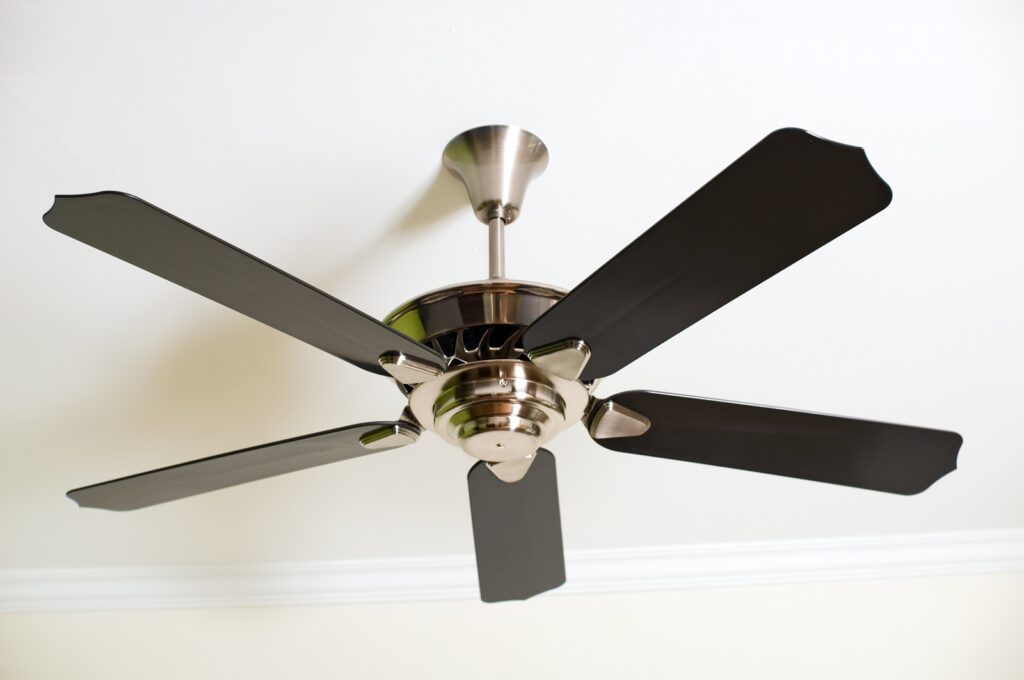
Remote-controlled ceiling fans rely on a small receiver module, typically housed inside the canopy where the fan mounts to the ceiling or within the motor housing itself, that listens for a signal from the handheld remote and translates it into commands for the fan and light functions. Older and many budget fan models use physical dip switches, small sliding switches usually arranged in a row of four, to set a specific frequency code that must match exactly between the remote and the receiver. Newer models more commonly use a digital learn-and-pair sequence instead, where the remote and receiver sync through a specific button-press pattern rather than a physical switch setting.
Because the receiver sits inside the fan’s canopy or housing, it is also exposed to whatever heat and humidity build up in that space, which in a DFW attic-adjacent ceiling box during summer can be considerable. This does not mean every remote issue is heat-related, but it is one more reason component wear inside the receiver is a realistic possibility alongside the more common battery and pairing issues.
What Causes It?
A consistent set of causes explains the large majority of ceiling fan remote failures, ranging from the simplest fix to something that genuinely needs an electrician.
Dead or Weak Remote Batteries
This is the most common cause by a wide margin and the first thing to check every time. Batteries that have been sitting unused for a long period can be weak even if they have never been installed before, so a battery that seems new is not automatically ruled out.
Mismatched Dip Switch Settings
On fans that use physical dip switches, the remote and the receiver must have the exact same switch pattern to communicate. If either set of switches has been bumped, changed during a battery swap, or set differently after a remote replacement, the two devices are effectively speaking different frequencies and will not respond to each other at all.
Lost Digital Pairing After a Power Interruption
Fans using a digital learn-and-pair system can lose their paired connection after a breaker trip, a power outage, or simply being unplugged from power for an extended period. Re-pairing typically requires pressing a specific button sequence within a defined window, often 30 to 60 seconds, after power is restored to the fan.
Receiver Damage or Failure
A receiver that has failed, sometimes visibly scorched or discolored from an internal electrical issue, will not respond to any remote, no matter how correctly it is paired or how fresh the batteries are. This is the point where troubleshooting shifts from a homeowner task to an electrical safety matter, and a full electrical inspection of the fixture is a reasonable next step if the canopy shows any sign of damage.
Radio Frequency Interference
Other household devices operating on similar frequencies, including some garage door openers and wireless doorbells, can occasionally interfere with a fan remote’s signal, though this is a less common cause than batteries or pairing issues.
Pull Chains Left in the Wrong Position
On fans that combine a remote receiver with manual pull chains, the light chain generally needs to be left in the on position and the fan speed chain set to its highest position for the receiver to properly modulate power to each function. A pull chain left in an intermediate or off position can make the fan appear unresponsive to the remote even though the receiver itself is functioning correctly.
Warning Signs to Watch For
A few signs help identify which cause applies before deciding whether the fix is a battery swap or a call to a licensed electrician.
- The remote has no light or display response at all when a button is pressed, suggesting the remote’s own batteries rather than the fan
- The fan worked normally before a recent power outage or breaker trip and has not responded since, suggesting lost pairing rather than a hardware failure
- The fan responds inconsistently, working sometimes and not others, which points toward interference or a marginal pairing rather than a fully dead connection
- A recent battery change in the remote coincided with the fan no longer responding, suggesting the dip switches were bumped during the battery swap
- Any burning smell, visible scorching, or discoloration is noticeable near the fan canopy or when the canopy is opened
- The fan works using manual pull chains but never responds to the remote at all, suggesting a receiver-specific issue rather than a wiring problem
DIY vs. Professional: What You Can Check Yourself
Most ceiling fan remote troubleshooting is safe for a homeowner to attempt, with one clear exception where the situation should be handed to a licensed electrician.
What You Can Safely Check
Replace the remote batteries with fresh ones first, every time, even if the current batteries seem recently installed. If that does not resolve it, power cycle the fan by turning off the breaker for about a minute and restoring power, then attempt the pairing sequence specific to your fan model within the required window. For dip switch fans, turning off the breaker before opening the canopy, confirming the switch pattern matches between remote and receiver, and closing the canopy back up is a reasonable homeowner task as long as the power stays off throughout. Checking that any manual pull chains are in the correct on and high-speed positions is also a simple first step.
When to Call a Licensed Electrician
Any sign of a scorched, discolored, or visibly damaged receiver should stop DIY troubleshooting immediately and prompt a call to a licensed electrician. A damaged receiver is an electrical component issue, not just a lost connection, and continuing to work inside the canopy or attempting to replace the receiver without confirming the wiring itself is sound is not a reasonable homeowner project. Persistent failures after battery replacement, dip switch confirmation, and a proper re-pairing attempt also warrant professional diagnosis, since the underlying cause may be in the fan’s wiring rather than the remote system itself.
Solutions
The right fix depends entirely on which cause is responsible, ranging from a two-minute battery swap to a full fan service call.
Battery Replacement
The simplest and most common fix, resolving the majority of remote issues without any further troubleshooting required.
Dip Switch Correction
Matching the dip switch pattern between the remote and receiver restores communication immediately once both are set identically, with power kept off at the breaker throughout the process.
Re-Pairing the Digital Connection
Following the specific pairing sequence for your fan model, typically involving a power cycle followed by a timed button press, restores a lost digital connection between remote and receiver.
Receiver Replacement
When the receiver itself has failed, a licensed electrician replaces the receiver module, confirming the wiring connections inside the canopy are sound and undamaged as part of the repair.
Universal Remote Kit Installation
When a fan’s original remote is no longer available or the original receiver cannot be sourced, a universal ceiling fan remote kit, which includes both a new remote and a new receiver, provides a complete replacement solution installed by a licensed electrician.
Why This Matters for Dallas-Fort Worth Homeowners
DFW’s extended summer cooling season means ceiling fans throughout Dallas, Fort Worth, and Haltom City accumulate significantly more operating hours per year than fans in milder climates, which means more cycles of use for the receiver’s internal components and a higher overall likelihood of a component eventually wearing out compared to fans that see lighter seasonal use.
Fan canopies mounted close to attic space in DFW homes are exposed to the same extreme summer heat that affects other attic-adjacent electrical components, and sustained high temperatures can accelerate wear on electronic components over years of exposure, one more reason receiver issues, while less common than simple battery or pairing problems, are a realistic possibility in this region. A fan showing persistent issues beyond the remote system alone is also worth evaluating alongside a broader whole house lighting upgrade if other fixtures in the home are due for attention at the same time.
Frequently Asked Questions: Ceiling Fan Remote Not Working? What to Check Before Yo…
My ceiling fan remote has no response at all when I press buttons. What should I check first?
Replace the batteries first, even if they seem recently installed, since batteries can be weak from sitting unused. If the remote still shows no light or response after fresh batteries, the remote itself may be faulty.
Why did my ceiling fan stop responding to the remote right after a power outage?
Fans using a digital pairing system can lose their connection to the remote after a power interruption. Power cycling the fan and following the specific re-pairing sequence for your model, usually within a 30 to 60 second window after power is restored, typically resolves this.
What is a dip switch and why does it matter for my ceiling fan remote?
A dip switch is a small sliding switch, usually one of four arranged in a row, that sets a specific frequency code inside both the remote and the fan’s receiver. If the pattern does not match exactly between the two, they cannot communicate, even with fresh batteries.
Is it safe to open my ceiling fan canopy to check the dip switches myself?
Yes, as long as the power is turned off at the circuit breaker before opening the canopy and remains off throughout the process. Never work inside an energized fan canopy.
How do I re-pair my ceiling fan remote after changing the batteries?
The exact steps vary by fan model, but most involve turning the fan off at the breaker, waiting about a minute, restoring power, and pressing a specific button or button combination on the remote within a limited time window. Checking your fan’s manual for the exact sequence is the most reliable approach.
What does it mean if my ceiling fan receiver looks scorched or discolored?
This indicates the receiver has experienced an internal electrical issue and should not be used further. This is a situation that requires a licensed electrician rather than continued DIY troubleshooting or a simple remote replacement.
Can other devices in my house interfere with my ceiling fan remote?
Yes, though it is a less common cause than batteries or pairing issues. Some garage door openers and wireless doorbells operate on similar frequencies and can occasionally cause intermittent interference with fan remote signals.
My ceiling fan works with the pull chain but not the remote. What does that mean?
This suggests the fan itself and its wiring are functioning correctly, and the issue is isolated to the remote system specifically, whether that is the remote, the receiver, or the pairing between them, rather than a broader electrical problem.
Should the pull chains be in a specific position for the remote to work?
Yes, on fans that combine a receiver with manual pull chains, the light chain generally needs to be in the on position and the fan speed chain at its highest setting for the receiver to properly control each function remotely.
Can I install a universal remote kit myself?
Universal remote kits include both a new remote and a new receiver that must be installed inside the fan canopy with the power off, which involves opening the fixture and working with the fan’s wiring connections. Many homeowners have a licensed electrician complete this step to ensure correct installation.
How long do ceiling fan receivers typically last?
There is no fixed lifespan, but receivers in fans that operate for extended hours each year, as is common in DFW homes during the long cooling season, and receivers exposed to sustained attic-adjacent heat, may experience component wear over time similar to other electronics in high-use, high-heat environments.
Does Tarrant Electric repair ceiling fan remotes and receivers?
Yes, we diagnose ceiling fan remote and receiver issues throughout the DFW area, confirming whether the issue is the remote, the receiver, or the underlying wiring, and complete the appropriate repair or replacement.
Why does my fan remote work in some rooms of the house but not consistently?
Inconsistent response is more often a sign of a marginal or partial pairing connection, weakening batteries, or occasional interference than a wiring issue, since the remote signal itself has limited range and can be affected by walls and distance from the receiver.
Can a ceiling fan remote issue indicate a bigger electrical problem?
In most cases, no. Remote issues are typically isolated to the remote system itself. A scorched or damaged receiver is the exception, since that does point to an underlying electrical concern that warrants a full inspection of the fan’s wiring connections.
How do I get my ceiling fan remote or receiver serviced in DFW?
Call 817-428-4404 or schedule online. Let us know what troubleshooting you have already tried, and we will assess whether the issue is the remote, the receiver, or something in the fan’s wiring that needs a closer look.
When to Call Tarrant Electric
Tarrant Electric provides licensed ceiling fan installation and repair throughout Dallas, Fort Worth, Haltom City, and the surrounding DFW communities. Licensed under TECL-31627, fully bonded and insured, and available 24 hours a day for emergency electrical service.
When a receiver has failed or a fan needs a full remote system replacement, our electricians handle the diagnosis and repair safely, confirming the wiring itself is sound rather than simply swapping components and hoping the issue resolves. With a 4.9-star Google rating across more than 95 reviews, we treat fan remote issues with the same careful diagnosis we bring to any electrical service call.
Take the Next Step
Most ceiling fan remote issues are a quick fix, and Tarrant Electric handles the ones that aren’t throughout Dallas, Fort Worth, Haltom City, and the surrounding DFW area. Licensed under TECL-31627, fully bonded and insured, and available 24 hours a day. Call 817-428-4404 or schedule online today.