


Why Texas’s Power Grid Makes Backup Generators a Practical Investment for DFW Homeowners
The Electric Reliability Council of Texas, which manages the power grid serving most of the state including the entire Dallas-Fort Worth metroplex, has forecast that summer 2026 electricity demand could exceed 92 gigawatts, which would break the grid’s current all-time record of 85.5 gigawatts set in August 2023. This is not a worst-case scenario projection. It is ERCOT’s working forecast for an ordinary summer under current conditions. For DFW homeowners, this is useful context for understanding why backup power has shifted from a nice-to-have to a practical consideration grounded in real, documented grid trends rather than speculation.
What Is Going On Here?
ERCOT operates the electrical grid for roughly 90 percent of Texas, serving about 27 million customers including the entire Dallas-Fort Worth area. Each year, ERCOT publishes a seasonal demand forecast based on expected weather patterns, population growth, and new large-scale electricity consumers joining the grid. The 2026 summer forecast represents a meaningful jump from recent years: demand peaked at 83.7 gigawatts in summer 2025, and the grid’s prior all-time record was 85.5 gigawatts, set during the August 2023 heat wave. ERCOT’s 2026 forecast of more than 92 gigawatts would surpass that record by a wide margin.
This matters for homeowners because grid demand and grid reliability are directly connected. A grid operating closer to its maximum capacity has less operating margin to absorb unexpected events, whether a generation unit going offline unexpectedly, a transmission line failure during severe weather, or demand spiking faster than forecast during an extreme heat event.
What Causes It?
Several documented, converging factors explain why ERCOT’s 2026 forecast is meaningfully higher than prior years, rather than this being an isolated anomaly.
Data Center and Cryptocurrency Mining Growth
ERCOT has reported that large electricity consumers, including data centers and cryptocurrency mining operations, added roughly half a gigawatt of demand to the grid since September 2025 alone, with another nearly 2 gigawatts of large-load growth expected to join the grid between May and September 2026.
Broader Economic and Population Growth
Beyond large individual consumers, ERCOT and independent energy analysts point to continued economic growth across Texas, including oil and gas operations, LNG export facilities, and general commercial activity, alongside the state’s ongoing population growth, as contributing to sustained demand increases year over year.
Hotter Expected Summer Conditions
ERCOT’s 2026 forecast explicitly cites expectations for a hotter summer than 2025 as a primary driver of the higher demand projection, since residential and commercial air conditioning load is the single largest driver of Texas summer electricity demand.
DFW-Specific Heat Patterns Already Confirmed
This is not a hypothetical pattern. North Texas has already seen Excessive Heat Warnings this season according to the National Weather Service Fort Worth/Dallas office, with heat index values reaching 100 to 110 degrees and the first 100-degree days of the year already recorded, confirming the hot conditions ERCOT’s forecast anticipated for the broader season.
Warning Signs to Watch For
For homeowners trying to gauge how seriously to take this forecast, these are the indicators worth understanding rather than dismissing or overreacting to.
- ERCOT itself has published the record-breaking forecast publicly, rather than this being third-party speculation
- The current all-time grid record was set as recently as August 2023, showing this is a recent and ongoing trend, not a one-time historical event
- Large new electricity consumers continue joining the grid faster than in prior years, with nearly 2 gigawatts expected between May and September 2026 alone
- DFW has already experienced confirmed Excessive Heat Warnings this season, consistent with the hot conditions driving the forecast
- ERCOT has stated it added nearly 11 gigawatts of new generation capacity in recent months specifically to help manage this demand growth
DIY vs. Professional: What Can You Handle Yourself?
There is no DIY path for addressing grid-level reliability, but homeowners do have a meaningful range of choices for how they prepare their own home, some requiring professional installation and some simply requiring awareness.
What You Can Safely Check Yourself
Staying informed about ERCOT conditions through its public conservation alerts, and having a basic plan for an outage such as knowing where flashlights and a manual phone charger are kept, costs nothing and is reasonable for every household regardless of whether a generator is in the plan.
When to Call a Licensed Electrician
Any actual backup power solution, from a manual transfer switch for a portable generator to a fully automatic whole-home standby system, requires a licensed electrician for safe and legal installation. This is not optional. Improperly connected backup power creates a real risk of backfeeding electricity into utility lines, which can electrocute utility workers attempting to restore power during exactly the kind of grid event this forecast describes.
Solutions
Homeowners considering backup power in light of this forecast generally have a few paths, each suited to different priorities and budgets.
Automatic Standby Generator
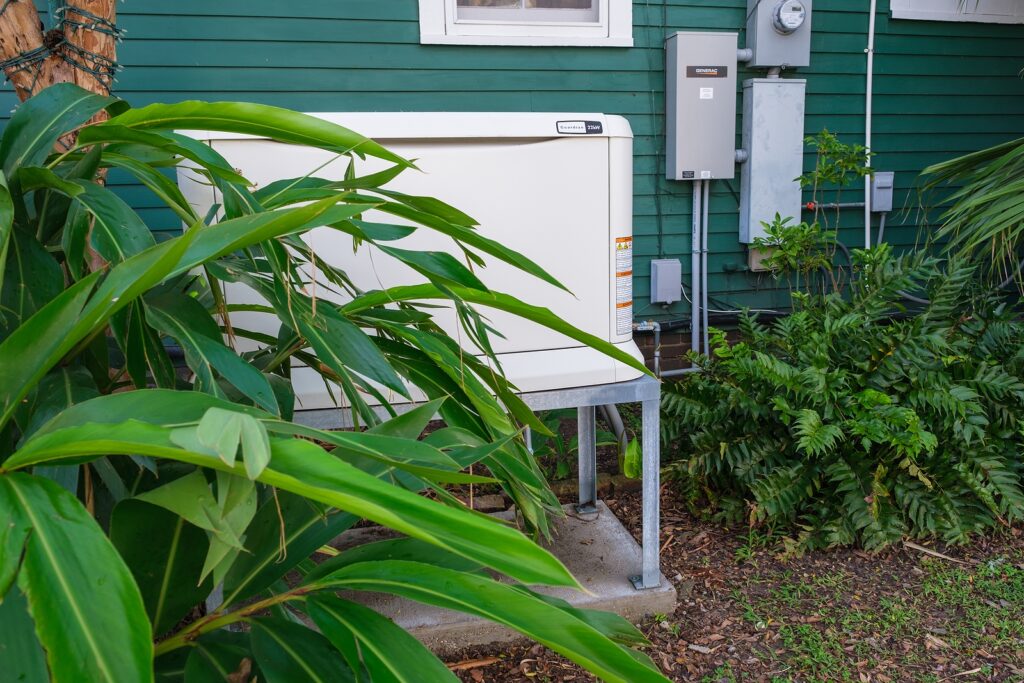
A whole-home or essential-circuits standby generator, fueled by natural gas or propane, detects a power loss and restores electricity automatically, typically within seconds, without requiring anyone to be home or manually start anything.
Portable Generator With a Properly Installed Transfer Switch
For homeowners not ready for a full standby system, a portable generator connected through a licensed electrician-installed manual transfer switch provides a safer and more practical alternative to running extension cords through windows, which carries both safety and code compliance concerns.
Load Calculation Before Purchasing
Rather than guessing at generator size, a licensed electrician can calculate your home’s actual electrical demand and recommend a system sized to your specific priorities, whether that means powering your entire home or just essential circuits like refrigeration, HVAC, and select outlets.
Panel and Circuit Readiness Review
Before any generator purchase, confirming your existing panel and circuit wiring can properly support the integration avoids surprises mid-installation and ensures the system will perform as expected when it is actually needed.
Why This Matters for Dallas-Fort Worth Homeowners
Dallas-Fort Worth sits within the ERCOT grid territory and is also served locally by Oncor for electric distribution, meaning the broader statewide demand pressures ERCOT has forecast translate directly into local grid conditions for Fort Worth, Haltom City, and the surrounding DFW communities. The region’s confirmed Excessive Heat Warning this season, with heat index values reaching as high as 110 degrees, places DFW squarely within the hot-summer conditions driving ERCOT’s record demand forecast.
North Texas also faces severe weather risk beyond summer heat alone, including high-wind thunderstorms and occasional winter ice events that have historically caused multi-day outages across the Oncor service territory independent of overall grid demand levels. This combination of summer demand strain and year-round severe weather risk is part of why backup power has become a more common consideration among DFW homeowners in recent years.
Frequently Asked Questions
What is ERCOT and why does its forecast matter for my home?
ERCOT, the Electric Reliability Council of Texas, manages the power grid for roughly 90 percent of the state, including the entire Dallas-Fort Worth area. Its seasonal demand forecasts give homeowners an early, official indication of how much strain the grid is expected to face, which is directly relevant to outage risk in your area.
Is a Texas grid emergency actually likely in summer 2026?
ERCOT has stated the probability of a grid emergency is low, around 0.09 percent for June and 0.21 percent for July based on its own modeling, and the agency has added significant new generation capacity to help manage the record forecast. The record demand forecast itself, however, is a separate fact from the emergency probability, and both are worth understanding together.
How does this 2026 forecast compare to past summers?
Summer 2025 peak demand reached 83.7 gigawatts, and the grid’s prior all-time record was 85.5 gigawatts, set in August 2023. ERCOT’s 2026 forecast of more than 92 gigawatts would represent a new record exceeding both of those prior benchmarks.
What is driving the record demand forecast for 2026?
ERCOT and independent energy analysts point to several converging factors: continued data center and cryptocurrency mining growth adding new large-scale demand, broader economic and population growth across Texas, and expectations for a hotter summer than 2025, which increases air conditioning load specifically.
Does a hotter summer forecast affect Dallas-Fort Worth specifically?
Yes. North Texas has already experienced confirmed Excessive Heat Warnings this season, with heat index values reaching 100 to 110 degrees, consistent with the hot conditions ERCOT’s forecast anticipated for the broader Texas grid this summer.
What size generator do I need for my DFW home?
Generator sizing depends on your home’s specific electrical load and which circuits you want protected during an outage, whether that means your entire home or just essential systems. A licensed electrician performs a load calculation to determine the right size for your specific situation.
Is a portable generator enough, or do I need a standby system?
This depends on your priorities. A portable generator with a properly installed transfer switch can cover essential needs during shorter outages, while an automatic standby system provides continuous, hands-free backup power that activates without anyone needing to be present.
Can I connect a generator to my home myself?
No. Generator installation, including any transfer switch connection to your home’s panel, must be performed by a licensed electrician. Improper connection risks backfeeding electricity into utility lines, which can electrocute utility workers and is also illegal under Texas law.
Does Oncor or ERCOT recommend homeowners get backup generators?
Neither organization makes generator recommendations to individual homeowners. ERCOT’s role is publishing demand forecasts and managing grid operations, while Oncor manages local power distribution. The decision to install backup power is a personal one based on each household’s own risk tolerance and priorities.
What fuel source is best for a standby generator in DFW?
Most DFW homes choose natural gas, supplied locally by Atmos Energy, or propane for properties without convenient natural gas access. A licensed electrician can help determine which option fits your home’s existing utility connections.
How quickly does a standby generator restore power during an outage?
A properly installed automatic standby generator typically detects a power loss and restores power to protected circuits within seconds, without requiring any manual action.
Does ERCOT’s forecast mean rolling blackouts are coming this summer?
ERCOT’s own modeling indicates a low probability of a grid emergency this summer, even with the record demand forecast, due in part to nearly 11 gigawatts of new generation capacity added in recent months. The record forecast and the likelihood of an actual emergency are two separate data points worth keeping distinct.
What other severe weather risks affect DFW power reliability besides summer heat?
North Texas also faces high-wind thunderstorms and occasional winter ice events, both of which have historically caused multi-day outages across the region independent of overall summer grid demand levels.
How long does generator installation typically take in the DFW area?
Most residential standby generator installations are completed within one to two days once permitting and any required gas line coordination are scheduled, though the full project timeline depends on your specific home and local permitting requirements.
Where can I check current ERCOT grid conditions myself?
ERCOT publishes real-time grid conditions and conservation alerts publicly, which can give homeowners an ongoing sense of how grid demand is tracking relative to the seasonal forecast throughout the summer.
When to Call Tarrant Electric
If ERCOT’s 2026 forecast has you considering backup power for your Dallas, Fort Worth, Haltom City, or surrounding area home, Tarrant Electric provides residential generator consultation, sizing, and installation, along with commercial generator solutions for business owners facing the same grid conditions. We are licensed under TECL-31627, fully bonded and insured, and available 24 hours a day for emergency electrical service.
We perform a proper load calculation for every project, explain your options without pressure, and handle the complete permitting and utility coordination process. With a 4.9-star Google rating, we have helped DFW homeowners prepare for exactly the kind of grid conditions this forecast describes.
Take the Next Step
Texas’s grid is facing a documented, record-breaking demand forecast for 2026, and a properly installed backup generator is one practical response. Tarrant Electric serves Dallas, Fort Worth, Haltom City, and the surrounding areas. Licensed under TECL-31627, fully bonded and insured, and available 24 hours a day for emergency electrical service. Call 817-428-4404 or schedule online to discuss your home’s backup power options today.