


Why Is Your Ceiling Fan Wobbling? Common Causes DFW Homeowners Should Know
A wobbling ceiling fan is almost always caused by one of six things: unbalanced blades, loose mounting screws, an electrical box that was never rated to hold a fan, a bent downrod, blades that no longer match in weight or pitch, or a worn motor. Most of these can be diagnosed in a few minutes, and some can be fixed without an electrician. Others, particularly anything involving the box the fan is mounted to, point to a safety issue that should not be ignored. This guide walks through each cause, how to tell them apart, and when the fix is a quick DIY job versus a job for a licensed electrician.
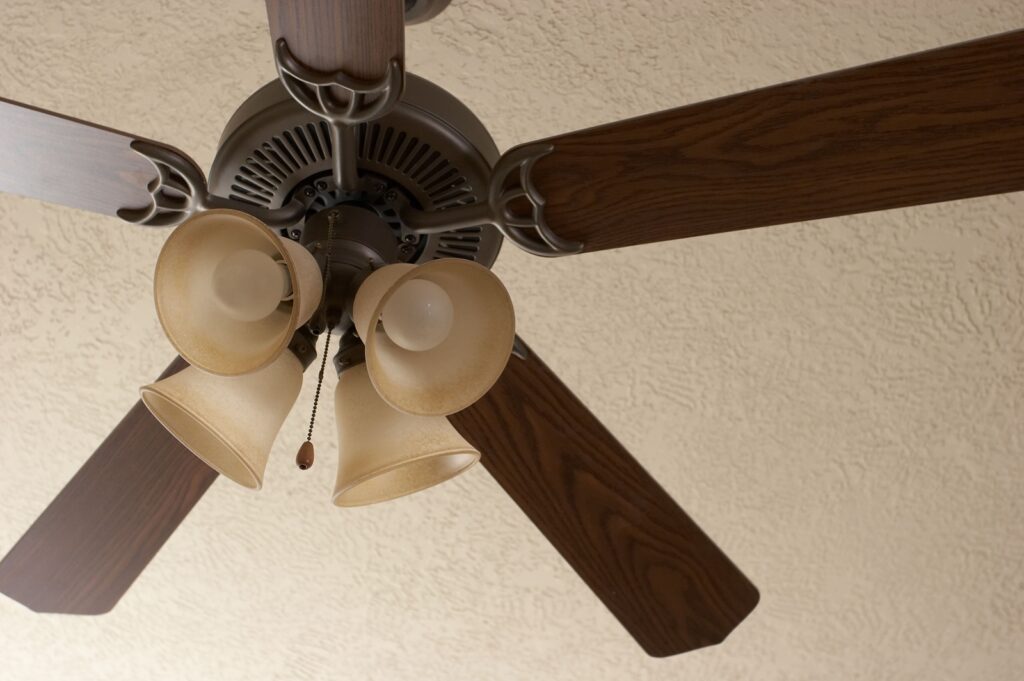
What Is Going On Here?
Ceiling fan wobble is the visible side-to-side or up-and-down movement of a fan while it operates, ranging from a faint shimmy to a pronounced shake that moves the entire light kit or canopy at the ceiling. A small amount of vibration is normal in any mechanical device with spinning blades. The distinction that matters is between movement at the blades themselves and movement at the point where the fan attaches to the ceiling.
Movement isolated to the blades is typically a balance or mounting issue with the fan itself. Movement that involves the canopy, the mounting bracket, or visible flexing at the ceiling junction box is a different and more serious category of problem, since it points to the structural connection between the fan and your home’s electrical system.
What Causes It?
Six causes account for nearly every ceiling fan wobble homeowners report. Working through them in order, from least to most serious, is the fastest way to identify what is actually happening with your fan.
Unbalanced Blades
Blades are manufactured to a tight weight tolerance, but normal use, humidity absorption into the blade material, or a slight warp over time can throw that balance off. This is the single most common cause of fan wobble and the easiest to correct, typically with a blade balancing kit available at most hardware stores.
Loose Blade Screws or Blade Irons
The screws connecting each blade to its blade iron, and the blade iron to the motor housing, can work loose over months or years of operation. A loose connection on even one blade changes that blade’s effective weight and angle relative to the others, producing a wobble that worsens at higher fan speeds.
An Electrical Box Not Rated for Fan Weight and Motion
Standard light fixture electrical boxes are rated only for the static weight of a light fixture, not for the dynamic, rotating load of a ceiling fan. If a fan was mounted to one of these boxes instead of a fan-rated box secured to a joist or an approved brace bar, the entire fixture can flex slightly with each rotation, which presents as wobble at the ceiling rather than at the blades. This requirement comes directly from the National Electrical Code, and a full electrical inspection can confirm box rating throughout your home, not just at one fixture.
A Bent or Improperly Seated Downrod
The downrod is the rigid rod connecting the fan motor to the ceiling mount on fans that are not flush-mounted. A downrod that was bent during shipping or installation, or one that is not fully seated and locked into the motor housing, will cause the entire fan body to wobble even if the blades themselves are perfectly balanced.
Mismatched or Warped Blades
Replacement blades from a different set, blades exposed to significant humidity or temperature swings, or blades that have warped unevenly over time can throw off the fan’s balance in a way that a standard balancing kit cannot fully correct, since the issue is the blade shape itself rather than its weight distribution.
Worn Motor Bearings
On older fans, worn bearings inside the motor housing can allow slightly more play in the rotating assembly than the design intended, producing a wobble that often comes with an audible hum or grinding sound and tends to worsen gradually over months rather than appearing suddenly.
Warning Signs to Watch For
Not every wobble requires the same urgency. These signs help distinguish a simple balance issue from a problem that needs professional attention.
- Wobble is isolated to the blades and does not involve visible movement at the ceiling canopy
- Wobble increases noticeably at higher fan speeds but the ceiling mount itself appears stable
- Wobble is accompanied by visible movement, flexing, or gaps opening at the ceiling junction box
- A grinding, humming, or clicking sound accompanies the wobble
- The wobble has appeared suddenly after a new fan installation rather than developing gradually
- The fan was installed on an existing light fixture box without a documented fan rating
DIY vs. Professional: What Can You Handle Yourself?
Whether a wobbling fan is a do-it-yourself fix or a job for a licensed electrician depends entirely on which of the six causes is responsible.
What You Can Safely Check Yourself
Blade balance issues, loose blade screws, and mismatched blades are typically safe for a homeowner to address directly. A blade balancing kit, available at most hardware stores, includes weighted clips that attach to the top of each blade to identify and correct the imbalance. Tightening blade screws with the fan powered off is a straightforward task that resolves a meaningful share of reported wobble issues without any electrical work involved.
When to Call a Licensed Electrician
Any wobble connected to the electrical box itself, including visible movement at the ceiling canopy, requires a licensed electrician. This is not primarily a convenience recommendation. An electrical box that is flexing under the fan’s rotational load was never engineered for that load, and continued use risks the fixture eventually pulling loose from the ceiling. A bent downrod replacement and motor bearing issues also generally call for professional diagnosis, since both can involve disassembling the fan from a powered electrical connection. Our ceiling fan installation team handles both new installs and this exact type of diagnostic call, alongside general electrical repair for anything the wobble turns out to be connected to.
Solutions
Once the cause is identified, the appropriate solution generally falls into one of these categories.
Blade Balancing Kit
For blade-only wobble, a balancing kit identifies which blade is out of balance and where to attach a small weight to correct it. This is typically a 15 to 20 minute process and resolves the issue completely when balance is the root cause.
Retightening Blade and Mounting Hardware
With the fan powered off, checking and retightening every visible screw at the blade irons, the motor housing, and the mounting bracket resolves wobble caused by hardware that has simply worked loose over time.
Fan-Rated Electrical Box Replacement
When the existing box is not rated for fan use, a licensed electrician replaces it with a properly rated box secured to a ceiling joist or an approved brace bar designed to span between joists. This is the correct fix regardless of how long the current fan has been installed without issue, and it is often paired with a broader look at circuit capacity if the room is being updated anyway.
Downrod Replacement or Reseating
A bent downrod typically needs replacement rather than repair, since bending the metal back risks weakening it further. An electrician can confirm whether the downrod is simply not fully seated, which is a quick fix, or genuinely bent, which requires replacement.
Fan Replacement
When motor bearing wear is the cause, particularly on an older fan, replacement is often more practical than attempting a motor repair, especially when paired with an opportunity to upgrade to a more efficient or quieter model.
Why This Matters for Dallas-Fort Worth Homeowners
Ceiling fans across the Dallas, Fort Worth, and Haltom City area run far more hours per year than in milder climates, since they remain in near-constant use throughout the region’s long cooling season. With the National Weather Service Fort Worth/Dallas office regularly issuing Excessive Heat Warnings and heat index values exceeding 100 degrees from June through September, fans in DFW homes accumulate wear faster than the national average, making blade balance and hardware checks a more frequent need here than in cooler regions. Choosing an ENERGY STAR certified fan for any replacement also helps offset the added run time with lower energy draw.
Housing age is the other major local factor. A significant share of homes throughout Fort Worth, Haltom City, and the surrounding communities were built decades before ceiling fans were a standard feature, which means many original light fixture boxes in these homes were never engineered to hold one. Any fan installed on an original box in an older DFW home, regardless of how long it has operated without an obvious problem, is a reasonable candidate for a professional box inspection.
Frequently Asked Questions
Is it dangerous to keep using a ceiling fan that wobbles?
A minor blade-only wobble is generally not an immediate safety hazard, though it does indicate a problem worth correcting. A wobble that involves visible movement at the ceiling canopy is a different matter, since it suggests the electrical box may not be securely supporting the fan, and continued use risks the fixture eventually working loose.
How do I know if my ceiling fan box is rated for fan use?
Fan-rated boxes are typically marked with the manufacturer rating directly on the box, but this label is often not visible without removing the existing fixture. A licensed electrician can confirm box rating during an inspection, which is the most reliable way to know for certain.
Can a ceiling fan balancing kit fix every type of wobble?
No. Balancing kits correct wobble caused by uneven blade weight, but they cannot fix wobble caused by a bent downrod, an unrated electrical box, or worn motor bearings. If a balancing kit does not resolve the issue, the cause likely lies elsewhere.
Why does my ceiling fan wobble more at higher speeds?
Imbalance effects amplify with rotational speed, so a blade or hardware issue that is barely noticeable on low speed often becomes pronounced on high speed. This pattern is a strong indicator that the wobble is blade-related rather than a structural mounting issue.
Can I tighten my ceiling fan blades myself?
Yes, with the fan powered off at the wall switch and, ideally, at the breaker. Checking and retightening the screws at each blade iron and at the motor housing is a task most homeowners can safely perform without professional help.
What is a fan-rated electrical box?
A fan-rated electrical box is specifically engineered and tested to support the dynamic rotational load of a ceiling fan, unlike a standard light fixture box, which is rated only for static weight. Fan-rated boxes are secured directly to a ceiling joist or to an approved brace bar that spans between joists.
How long does it take to replace an unrated electrical box with a fan-rated one?
For a licensed electrician with attic or ceiling access, this is typically completed within the same service visit as the fan installation itself, often within one to two hours depending on the specific ceiling and framing conditions.
Can a wobbling ceiling fan fall from the ceiling?
If the underlying cause is an unrated or improperly secured electrical box, continued use does carry a real risk of the fixture eventually working loose over time. This is the primary reason box-related wobble should be addressed by a licensed electrician rather than left unaddressed.
Why does my new ceiling fan wobble right after installation?
A wobble appearing immediately after a new installation, rather than developing gradually, often points to a downrod that is not fully seated, a shipping-related blade imbalance, or an installation error rather than a wear-related cause. This is worth addressing promptly while the installation is still recent.
Does Dallas-Fort Worth heat affect ceiling fan wear?
Yes. The region’s long cooling season means fans throughout Dallas, Fort Worth, and Haltom City run substantially more hours per year than in milder climates, which accelerates normal wear on blades, hardware, and motor bearings compared to fans in less demanding climates.
Can a downrod be repaired if it is bent, or does it need replacement?
A bent downrod generally needs replacement rather than repair, since attempting to bend the metal back into shape risks weakening it at the bend point, which could create a more serious failure later.
What does it mean if my fan makes a grinding noise along with the wobble?
A grinding or clicking noise accompanying wobble often points to worn motor bearings rather than a blade balance issue. This combination is a good indicator that professional diagnosis, and likely fan replacement, is the appropriate next step.
Should I replace just the blades if they are warped, or the whole fan?
If the motor and mounting hardware are otherwise in good condition, replacing only the blade set with a matched, manufacturer-compatible set can resolve warp-related wobble without replacing the entire fan, provided the new blades are confirmed compatible with your specific motor model.
Can an electrician inspect my ceiling fan box without removing the fan?
In many cases, a visual inspection from inside the canopy or from attic access above can confirm box rating without fully removing the fan, though a complete assessment sometimes requires temporarily taking the fan down, which a licensed electrician can do safely.
How often should ceiling fans be inspected in DFW homes?
Given the region’s heavy fan usage during the long cooling season, a periodic check of blade balance and mounting hardware every year or two is a reasonable practice, with a professional box inspection warranted any time a fan is replaced or if your home was built before ceiling fans were standard.
When to Call Tarrant Electric
If your fan’s wobble involves the ceiling mount itself, if you hear grinding or clicking alongside the wobble, or if you are simply unsure which of these causes applies to your situation, Tarrant Electric provides licensed ceiling fan diagnosis and installation throughout Dallas, Fort Worth, Haltom City, and the surrounding areas. We are licensed under TECL-31627, fully bonded and insured, and available 24 hours a day for emergency electrical service.
Our electricians verify the rating of your existing electrical box before any new fan installation and correct unrated boxes as part of the job, not as an upsell discovered after the fact. With a 4.9-star Google rating, our team has handled this exact diagnosis for homeowners throughout the DFW area many times over.
Take the Next Step
A wobbling ceiling fan is rarely something to ignore indefinitely, even when the cause turns out to be minor. Tarrant Electric provides licensed ceiling fan diagnosis, repair, and installation throughout Dallas, Fort Worth, Haltom City, and the surrounding areas. Licensed under TECL-31627, fully bonded and insured, and available 24 hours a day for emergency electrical service. Call 817-428-4404 or schedule online to get your fan properly diagnosed today.