


Why Summer Heat and Heavy Appliance Loads Can Overwhelm Your Electrical Service
If your lights dim when the air conditioning kicks on, your breakers trip more often in July than in January, or your home feels less reliable as temperatures climb across the Dallas-Fort Worth area, your electrical service may be struggling to keep pace with the demands of a Texas summer. This is not an unusual situation for older DFW homes, and it is one that can be diagnosed, understood, and resolved with the help of a licensed electrician.
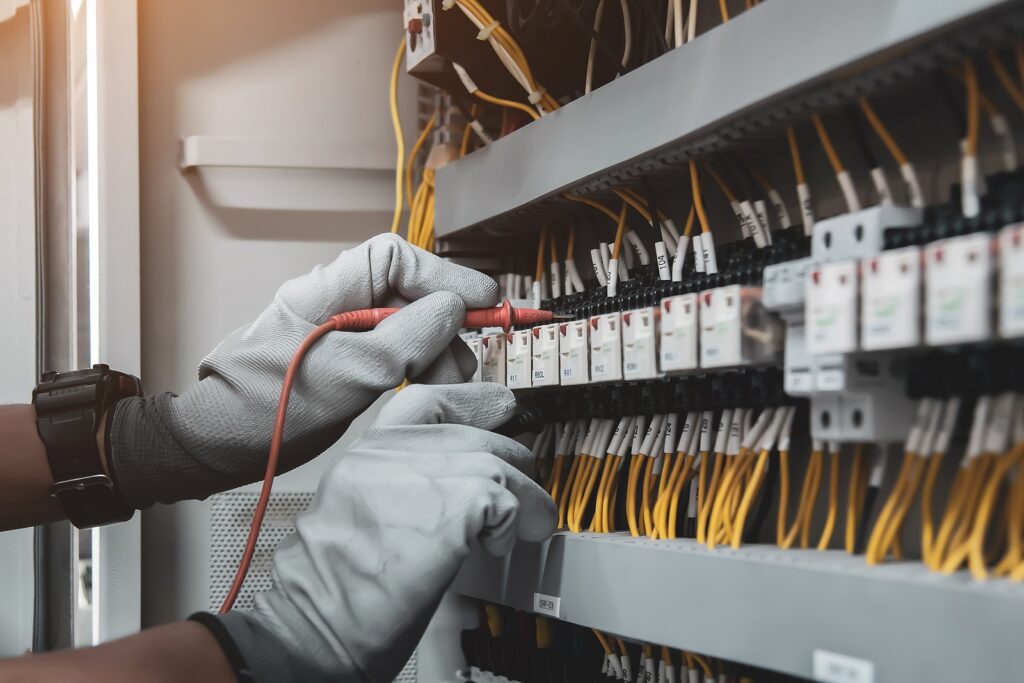
This blog explains exactly why summer is the most demanding season for your home’s electrical system, what happens when the total load exceeds your service capacity, which warning signs point to a real capacity problem, and what your options are for addressing it. If you recognize your home in these descriptions, the information here is a practical starting point for the conversation you need to have with a professional.
What Is an Electrical Service and Why Does Its Capacity Matter?
Your home’s electrical service is the system that delivers power from the utility grid to every outlet, appliance, switch, and circuit inside the building. It includes the overhead or underground service entrance cable, the meter base where the utility connects, the main disconnect, and your electrical panel with its circuit breakers. The total capacity of this system is measured in amperes (amps), and that capacity determines how much electrical current your home can safely use at any given moment.
Most homes built before 1980 in the DFW area were installed with 100-amp electrical service. That was the standard at the time and was well matched to the electrical profile of a typical 1960s or 1970s household, which might have included a window air conditioning unit, a basic electric range, a standard water heater, and conventional lighting. Today, that same home may be running central air conditioning, multiple refrigerators, an electric vehicle charger, a washer and dryer, smart home systems, a home office setup, a pool, and a full range of modern kitchen appliances, often at the same time.
A 100-amp service operates at 240 volts, giving it a theoretical maximum of 24,000 watts. However, the National Electrical Code (NFPA 70) requires that continuous electrical loads be limited to no more than 80 percent of a circuit’s or service’s rated capacity. That brings the practical usable limit of a 100-amp service down to approximately 19,200 watts. On a peak summer afternoon in DFW, that headroom can disappear in a matter of minutes.
How Summer Appliance Loads Push Your Electrical System to Its Limits
Texas summers are among the most demanding in the country for residential electrical systems. The Electric Reliability Council of Texas (ERCOT), which manages the grid for most of the state, recorded a summer 2025 peak demand of 83.9 gigawatts. ERCOT’s own post-season analysis estimated that peak would have reached 88.5 gigawatts without active demand response curtailments from large industrial customers. For summer 2026, ERCOT has forecasted a new potential peak of 87.5 gigawatts as population growth and electrification continue to accelerate across the region.
At the individual home level, that grid-level pressure translates directly into your home’s electrical system being pushed harder than at any other time of year. Here is a breakdown of the major contributors.
| Appliance / System | Typical Wattage Draw | Notes |
| Central Air Conditioning (3-ton) | 3,000 to 4,000 watts | Runs nearly continuously on hot DFW afternoons |
| Electric Water Heater | 3,000 to 5,500 watts | Active during morning and evening recovery cycles |
| Level 2 EV Charger | 7,200 watts minimum (NEC) | Requires dedicated 40-60 amp circuit |
| Electric Clothes Dryer | 5,000 to 7,000 watts | High demand during peak evening hours |
| Pool Pump (single-speed) | 1,500 to 2,500 watts | Runs 8-12 hours daily in summer |
| Refrigerator(s) | 300 to 600 watts | Constant background load; more in heat |
| Lighting, devices, standby | 1,000 to 2,000 watts | Varies by home size and occupancy |
Central Air Conditioning
Air conditioning is the single largest electricity consumer in the average American home, accounting for approximately 19 percent of total annual household energy use according to the U.S. Energy Information Administration. A central AC system in a DFW home draws between 3,000 and 4,000 watts when the compressor is actively running. During early and mid-June, when DFW regularly records temperatures at or above 100 degrees Fahrenheit, the compressor can run nearly continuously throughout the afternoon and evening hours. That single appliance can consume 20 percent or more of a 100-amp service’s total practical capacity by itself.
Electric Water Heaters and Laundry Equipment
An electric water heater with a standard dual-element setup draws 3,000 to 5,500 watts when the heating element is active. A standard electric clothes dryer adds another 5,000 to 7,000 watts during operation. In a household where the dryer runs in the early evening while the water heater recovers from the day’s use and the air conditioning is running full tilt, just those three loads can reach 11,500 to 16,500 watts, before accounting for the kitchen, home office, lighting, or anything else drawing power in the home.
Level 2 EV Chargers
Level 2 home EV chargers are becoming increasingly common in the DFW area as electric vehicle adoption grows across the region. Under the current National Electrical Code, a Level 2 charger is calculated at a minimum of 7,200 watts for load planning purposes, and it requires a dedicated 40- to 60-amp circuit. That single addition can account for 25 to 50 percent of a 100-amp service’s total practical capacity on its own. For homes that charge an EV in the evening while the AC, water heater, and dryer are also running, the math becomes challenging very quickly. For more on what a home needs to support a charger, see EV charger installation.
Pool and Outdoor Equipment
A residential pool pump draws between 1,500 and 2,500 watts and typically runs eight to twelve hours per day during DFW summers. Outdoor kitchens, spa heaters, string lighting, and landscape systems add further to the load. Pool-related equipment alone can contribute 2,500 to 5,000 or more watts to peak summer demand for homes that have outdoor amenities.
The Cumulative Load Problem
The issue that leads to electrical service overload is never a single appliance. It is the combination of several high-draw appliances running simultaneously on a service that was sized for a different era. Here is what a realistic peak summer afternoon might look like in an older DFW home:
- Central AC system: 3,500 watts
- Electric water heater: 4,500 watts
- Level 2 EV charger: 7,200 watts
- Pool pump: 2,000 watts
- Refrigerator (main unit): 350 watts
- Lighting, devices, standby loads: 1,500 watts
Combined estimated load: approximately 19,050 watts, right at the practical limit of a 100-amp service. Adding the electric dryer, a second refrigerator in the garage (common in DFW homes), or a window unit in a bedroom, and the system is over its practical ceiling.
A 200-amp service provides approximately 38,400 watts of usable capacity under the same 80 percent rule. That is nearly double the headroom of a 100-amp service and is designed to accommodate the profile of the modern home without chronic stress during peak demand periods. Many communities served by Tarrant Electric, including Haltom City, North Richland Hills, Euless, Bedford, Hurst, and Richland Hills, have a significant share of homes built during the 1960s, 1970s, and early 1980s that have never had their service upgraded.
Warning Signs That Your Electrical Service Is Being Overwhelmed
The symptoms of an overloaded electrical service are usually gradual and easy to normalize as “just the way the house is.” Recognizing these signs for what they actually represent gives you the information you need to act before the situation causes appliance damage or requires emergency service. Here are the most common indicators.
| Warning Sign | What It Indicates |
| Lights dim noticeably when AC or dryer starts | Significant voltage drop; service may be near capacity |
| Breakers trip more often in summer than winter | Total system load approaching or exceeding service limit |
| Outlets or switch plates feel warm to the touch | Circuit wiring is carrying a load close to its design limit |
| Appliances run slower or heat less effectively | Voltage sag from overloaded service reducing appliance output |
| Panel has no open circuit slots | Panel and potentially service are at maximum configuration |
| Electric bills spike unusually in summer | Overloaded circuits cause appliances to work harder, using more energy |
Lights That Dim or Flicker When Large Appliances Start
If your lights dim noticeably at the exact moment the air conditioning compressor starts, or when the dryer kicks in, your electrical service is experiencing a significant voltage drop. This occurs because large motors require a higher starting current than their running current, and that spike pulls the available voltage down across the entire system. Occasional, barely perceptible dimming is not alarming, but consistent and noticeable dimming on a regular basis indicates the service is running close to its capacity limit.
Breakers That Trip More Frequently in Summer
A circuit breaker that trips is functioning as designed. The concern is when the same breakers trip repeatedly, especially during hot weather when the system is under maximum load. Frequent trips on specific high-load circuits, or a main breaker that trips, suggest the total demand on the service is approaching or exceeding what it can safely deliver over sustained periods.
Outlets or Switch Plates That Feel Warm
Outlets or switch covers that are warm to the touch indicate that the wiring on that circuit is carrying more current than its design calls for. Electrical resistance in a loaded wire generates heat, and warmth that is noticeable to the touch is a signal that the circuit is operating at a level that warrants evaluation by a licensed electrician.
Appliances Performing Below Normal Output
Slower heating cycles in the oven, longer dryer cycles, a dishwasher that does not heat water effectively, or a refrigerator that runs constantly can all indicate voltage sag from an overloaded service. The appliances are not defective. They are operating at a reduced voltage level because the system cannot consistently deliver its rated supply. These are system symptoms, not appliance problems.
A Panel With No Available Circuit Slots
If your electrical panel is completely full with no open breaker slots, or if an electrician has previously told you there is no room to add circuits without a panel upgrade, that is an indication that the system has reached the limit of its configuration. Whether a panel upgrade alone is sufficient or whether a service upgrade is also warranted depends on the amperage of your service entrance, which requires a professional assessment.
DIY Assessment vs. What Requires a Licensed Electrician
What Homeowners Can Reasonably Observe
There are practical steps a homeowner can take to assess the situation before calling an electrician. You can check the amperage rating of your service by looking at the label on your main circuit breaker, which is the largest breaker in your panel. A label reading “100A” means 100-amp service. You can also take inventory of the large appliances currently in your home, note whether you experience the warning signs described above, and think about whether any high-demand appliances (EV chargers, pool equipment, additional HVAC) have been added since the home was built or last upgraded.
This self-assessment gives you useful information to bring to an electrician and helps you understand what questions to ask during the evaluation. It does not substitute for a professional load calculation.
What Requires a Licensed Electrician
The following steps require a licensed electrical contractor:
- Performing a load calculation to determine whether your current service is adequate for your actual and planned loads
- Opening or inspecting the interior of the electrical panel beyond reading the label on the main breaker
- Assessing the service entrance cable, meter base, or main disconnect
- Adding, relocating, or upgrading any circuits within the panel
- Performing any service upgrade work, including coordination with the utility provider
In Texas, residential electrical work must be performed by a licensed electrical contractor. Tarrant Electric holds license TECL-31627 from the Texas Department of Licensing and Regulation, is fully bonded and insured, and serves homeowners throughout Dallas, Fort Worth, Haltom City, and more than 40 communities across the DFW metro.
Solutions: From Circuit Adjustments to Full Service Upgrades
Not every home experiencing electrical stress during summer requires a full service upgrade. Understanding the range of available solutions helps you have a more informed conversation with your electrician and make the right decision for your home and budget.
Load Management and Dedicated Circuit Addition
In some cases, the problem is not the total service capacity but how the load is distributed across the panel. An electrician can redistribute heavy loads across different circuits, identify circuits that are significantly overloaded compared to others, and add dedicated circuits for high-draw appliances that are currently sharing circuits with other loads. This approach can meaningfully reduce thermal stress on the system and improve reliability without requiring a full service upgrade. See more about circuit installation and upgrades and how dedicated circuits support high-demand appliances.
Panel Upgrade
If your panel is undersized, outdated, or has no available slots for new circuits, an upgrade replaces the breaker panel with a modern unit that offers more circuit capacity, current breaker technology including AFCI and GFCI protection where required by code, and better load organization. A panel upgrade addresses the internal distribution system. However, if the service entrance cable itself is rated for only 100 amps, replacing the panel alone does not increase your home’s total available capacity from the utility connection. For more on when a panel upgrade is the right starting point, see electrical panel and breaker replacement.
Full Electrical Service Upgrade
A full service upgrade is the most comprehensive solution for a home that needs more total capacity. It involves replacing the service entrance cable, the meter base, the main disconnect, and typically the panel as part of the same project. The result is a system capable of supporting the complete electrical load of a modern home, including EV chargers, upgraded HVAC equipment, pool systems, and any planned future additions.
The process requires a permit from the local municipality, an inspection upon completion, and coordination with the utility provider for meter disconnection and reconnection. Tarrant Electric manages every step of this process for homeowners, from the initial load calculation through the final utility reconnection.
Wiring Evaluation and Upgrades
Increasing service capacity on a home with aging branch circuit wiring addresses only part of the system. Homes with aluminum branch circuit wiring, which was common in DFW construction between 1965 and 1973, or with cloth-insulated wiring from earlier decades, may benefit from a wiring evaluation alongside the service upgrade to ensure the entire system is consistent with current capacity requirements. See more about electrical wiring installation and upgrades for homes that need a more comprehensive update.
Why This Problem Is Especially Relevant for Dallas-Fort Worth Homeowners
The Dallas-Fort Worth metropolitan area is experiencing growth that places unique demands on both the regional grid and individual home electrical systems. ERCOT’s long-term forecast projects Texas peak demand could reach 145 gigawatts by 2031, driven by DFW’s expanding data center infrastructure, continued population growth, and the accelerating adoption of electric vehicles across Tarrant and Dallas counties. That regional demand growth puts the entire grid under more pressure during peak summer periods, which compounds the impact of individual homes that are already running at or near their service capacity.
At the neighborhood level, this growth shows up in older homes being asked to support appliance profiles that were simply not anticipated when those homes were built. Communities including Haltom City, North Richland Hills, Bedford, Euless, Hurst, Richland Hills, and many others throughout the metro area have a substantial share of homes from the 1960s through the early 1980s. Texas has a median owner-occupied home age of approximately 28 years according to the American Community Survey, but homes in older DFW suburbs are well above that median, and many were installed with 60-amp or 100-amp service that was standard for that era.
A 2025 survey from the University of Houston and Texas Southern University found that nearly 45 percent of Texas households pay more than $200 per month on average for summer electricity. Homes running on undersized electrical service are not only less reliable during peak summer months but often less energy-efficient as well, because voltage sag causes appliances to draw more current to achieve the same output, adding to the overall energy cost.
Understanding the current state of your home’s electrical service is the first step toward a more reliable and efficient system. Tarrant Electric provides licensed electrical services in Dallas, Fort Worth, Haltom City, and surrounding DFW communities.
FAQs About Home Electrical Service Overload
What is an electrical service upgrade?
An electrical service upgrade involves replacing the components that connect your home to the utility grid, including the service entrance cable, the meter base, the main disconnect, and the electrical panel. The goal is to increase the total amperage your home can safely use, typically from 100 amps to 200 amps or higher.
What is the difference between 100-amp and 200-amp electrical service?
A 100-amp service operates at 240 volts and can deliver up to 24,000 watts of power, with a practical usable capacity of around 19,200 watts under the 80 percent continuous load guideline required by the National Electrical Code. A 200-amp service nearly doubles that capacity to approximately 48,000 watts, with a practical usable limit of around 38,400 watts.
How do I know if my home has 100-amp or 200-amp electrical service?
The main circuit breaker in your electrical panel is labeled with its amperage rating. A label reading “100A” indicates 100-amp service. If the label reads “200A,” your service is already upgraded. When in doubt, a licensed electrician can confirm your service size during an on-site inspection without any disassembly required.
What appliances draw the most electricity during summer?
Central air conditioning systems are the single largest electrical draw in most DFW homes, using between 3,000 and 4,000 watts during operation. Electric water heaters add another 3,000 to 5,500 watts. A Level 2 EV charger is calculated at a minimum of 7,200 watts under the National Electrical Code. Pool pumps typically draw 1,500 to 2,500 watts, and electric clothes dryers use 5,000 to 7,000 watts. The problem is not any single appliance but the combination of several running at the same time.
Is it normal for lights to dim when the AC turns on?
A brief, very slight dimming at the exact moment a large motor starts is not uncommon in any home. However, noticeable and consistent dimming each time the air conditioning, dryer, or other large appliance starts indicates that the electrical service is experiencing a significant voltage drop. This pattern warrants an evaluation by a licensed electrician to determine whether the service capacity is adequate.
Can I add a Level 2 EV charger to a 100-amp electrical service?
In some cases, yes, but it depends on the existing load profile of the home. A Level 2 charger is calculated at a minimum of 7,200 watts under the National Electrical Code, which represents 37 to 50 percent of a 100-amp service’s practical usable capacity. If the home already runs significant electrical loads, adding a Level 2 charger without a service assessment may result in chronic overloading. A licensed electrician should perform a load calculation before installation to confirm whether the current service can support it safely.
What happens when a home’s electrical service is consistently overloaded?
Consistent overloading causes repeated circuit breaker trips, which are the panel’s protective response to excess current. Over time, this places stress on the panel components, the wiring, and the connected appliances. Appliances may perform below their rated output due to voltage sag, cycle times may lengthen, and components throughout the electrical system experience accelerated wear. An evaluation by a licensed electrician is the appropriate next step when these conditions occur regularly.
Does an electrical service upgrade require a permit in Texas?
Yes. An electrical service upgrade is a major project that requires a permit from the local municipal authority in Texas. The work must be performed by a licensed electrical contractor, and the completed work must pass a code inspection. A professional electrician will also need to coordinate with the local utility provider for meter disconnection and reconnection as part of the project. Tarrant Electric handles permit applications and utility coordination as part of every service upgrade project.
How long does a residential electrical service upgrade take?
The in-home electrical work for a typical residential service upgrade is generally completed within one to two days. The total project timeline from scheduling to final utility reconnection may extend to several days or a week, depending on permit processing times and the utility company’s availability for meter disconnection and reconnection. Your electrician can provide a specific timeline after the initial assessment.
Will an electrical service upgrade increase my home’s value?
An updated electrical service can have a positive effect on home value, particularly in older DFW neighborhoods where many homes still have 100-amp service. Buyers and their lenders increasingly scrutinize the electrical system as part of the home inspection process. A 200-amp service signals that the home’s infrastructure is capable of supporting modern living, including EV chargers, upgraded HVAC systems, and additional appliances, which is a meaningful advantage in a competitive real estate market.
What is the difference between a panel upgrade and a service upgrade?
A panel upgrade replaces the circuit breaker panel inside your home, adding capacity for more circuits and more current breaker technology. A service upgrade is a broader project that includes the panel plus the service entrance cable, the meter base, and the main disconnect. If your home’s service entrance is already rated for 200 amps but your panel is the limiting factor, a panel upgrade may be sufficient. If the service entrance itself is undersized at 100 amps, a full service upgrade is required to actually increase your home’s total available capacity.
Can older home wiring handle increased service capacity?
Increasing the service entrance capacity does not automatically make older branch circuit wiring safe or adequate for higher loads. Homes with aluminum branch circuit wiring, which was common in DFW homes built between 1965 and 1973, or cloth-insulated wiring from the 1950s and early 1960s, may require wiring evaluation and upgrades alongside the service upgrade. A licensed electrician will assess the condition of the branch circuit wiring as part of a complete whole-home electrical evaluation.
How often should DFW homeowners have their electrical system assessed?
The National Electrical Code recommends a professional inspection every three to five years for occupied residential properties. An assessment is also advisable before any major renovation, before adding a high-demand appliance such as an EV charger or hot tub, and any time recurring warning signs appear, including frequent breaker trips, lights that dim under load, or outlets and switch covers that feel warm to the touch. Homes in the DFW area built before 1985 that have not had a recent electrical evaluation are good candidates for a proactive assessment.
What causes an electrical service to become overloaded over time?
Electrical service sizing is determined at the time a home is built based on the anticipated electrical demand of that era. As families add appliances, upgrade HVAC systems, install EV chargers, build home additions, and adopt smart home technology, the total connected load increases. A service that was appropriately sized for a 1970s household, which might have had a window AC, a basic electric range, and standard lighting, may be significantly undersized for the same home today with central AC, an electric water heater, a dryer, an EV charger, a home office, and pool equipment all drawing power simultaneously.
Does summer weather itself damage electrical service components?
Extreme heat does not directly damage a properly installed service entrance under normal operating conditions. However, sustained high temperatures can accelerate wear on service entrance cables and outdoor electrical components exposed to direct sunlight, reduce the current-carrying capacity of conductors slightly, and increase the likelihood that components operating at or near their load limits will experience stress. Severe weather events such as storms, lightning, and power surges present the more significant direct risk to the service entrance and panel. These are among the reasons that periodic inspections of outdoor electrical components are a sound maintenance practice for DFW homeowners.
When to Call Tarrant Electric for an Electrical Service Assessment
If you recognize any of the warning signs described in this article, or if your home was built before 1985 and has never had a professional electrical assessment, scheduling an evaluation with a licensed electrician is a sound next step. Proactive assessment is far less disruptive than waiting until the system fails during the hottest part of a Texas summer.
Tarrant Electric is licensed by the Texas Department of Licensing and Regulation (TECL-31627), fully bonded and insured, and has earned a 4.9-star rating on Google across more than 95 verified reviews from homeowners across the DFW metro area. We give every customer clear options and transparent information about what their home needs before any work begins. We do not start work until you approve it, and we stand behind every project with a 100 percent satisfaction guarantee.
Our electricians perform full load calculations to determine whether your current service is adequate for your actual and planned load. We explain the findings in plain language, outline the available options, and handle every part of a service upgrade project from the permit application through the final utility reconnection. For homeowners adding EV chargers, upgrading HVAC systems, planning additions, or simply trying to understand whether their older home’s electrical system is keeping up with their needs, a professional evaluation is the right starting point.
Schedule Your Electrical Service Assessment Today
The hottest weeks of a DFW summer are when your electrical service is under its greatest stress. If your home is showing signs of an overloaded system, or if you are planning additions that will increase your total load, now is the right time to schedule an assessment with a licensed, insured electrician.
Call Tarrant Electric at 817-428-4404 or schedule online to speak with a licensed electrician about your home’s electrical capacity. Serving Dallas, Fort Worth, Haltom City, and the surrounding DFW area. Licensed TECL-31627. Fully bonded and insured. 100 percent satisfaction guaranteed.